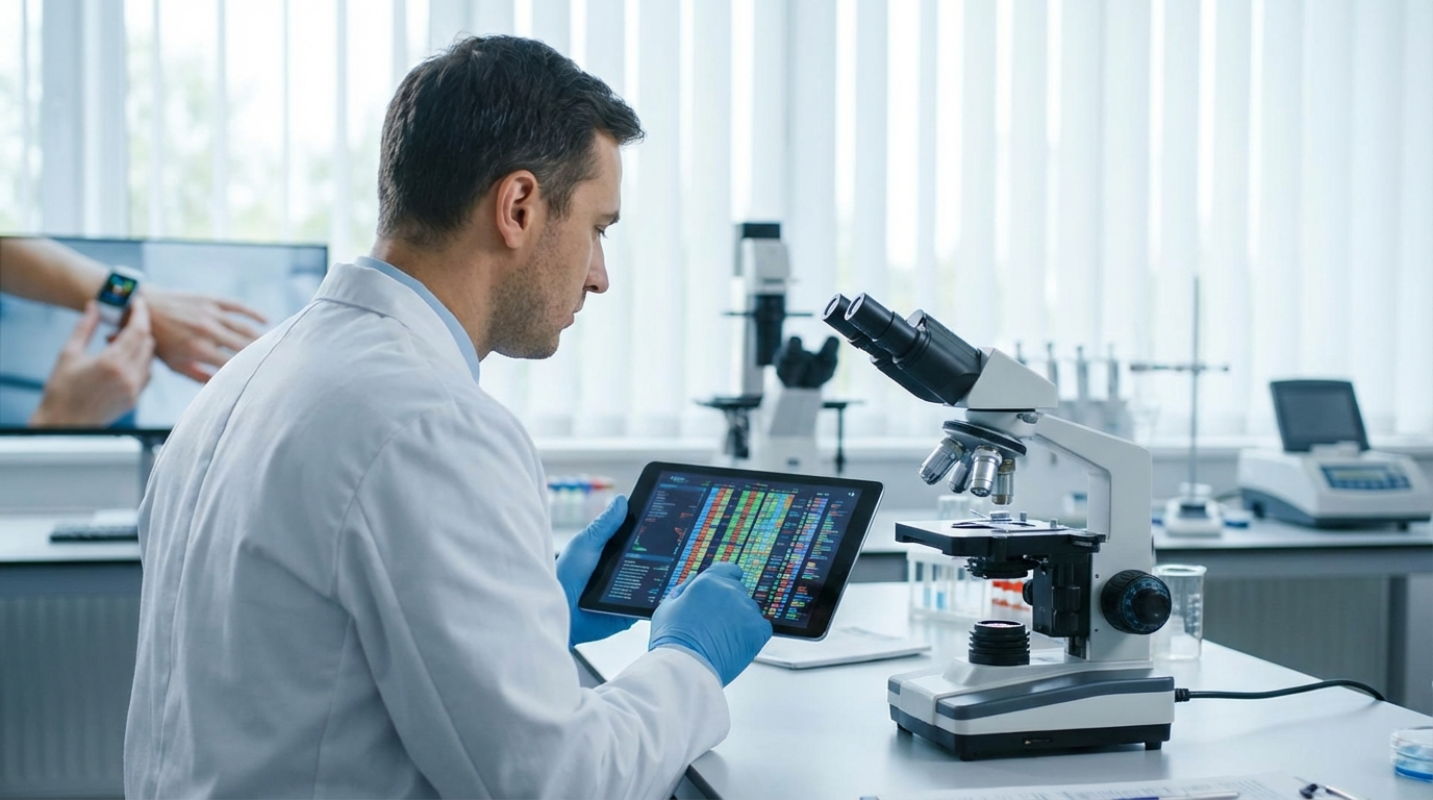
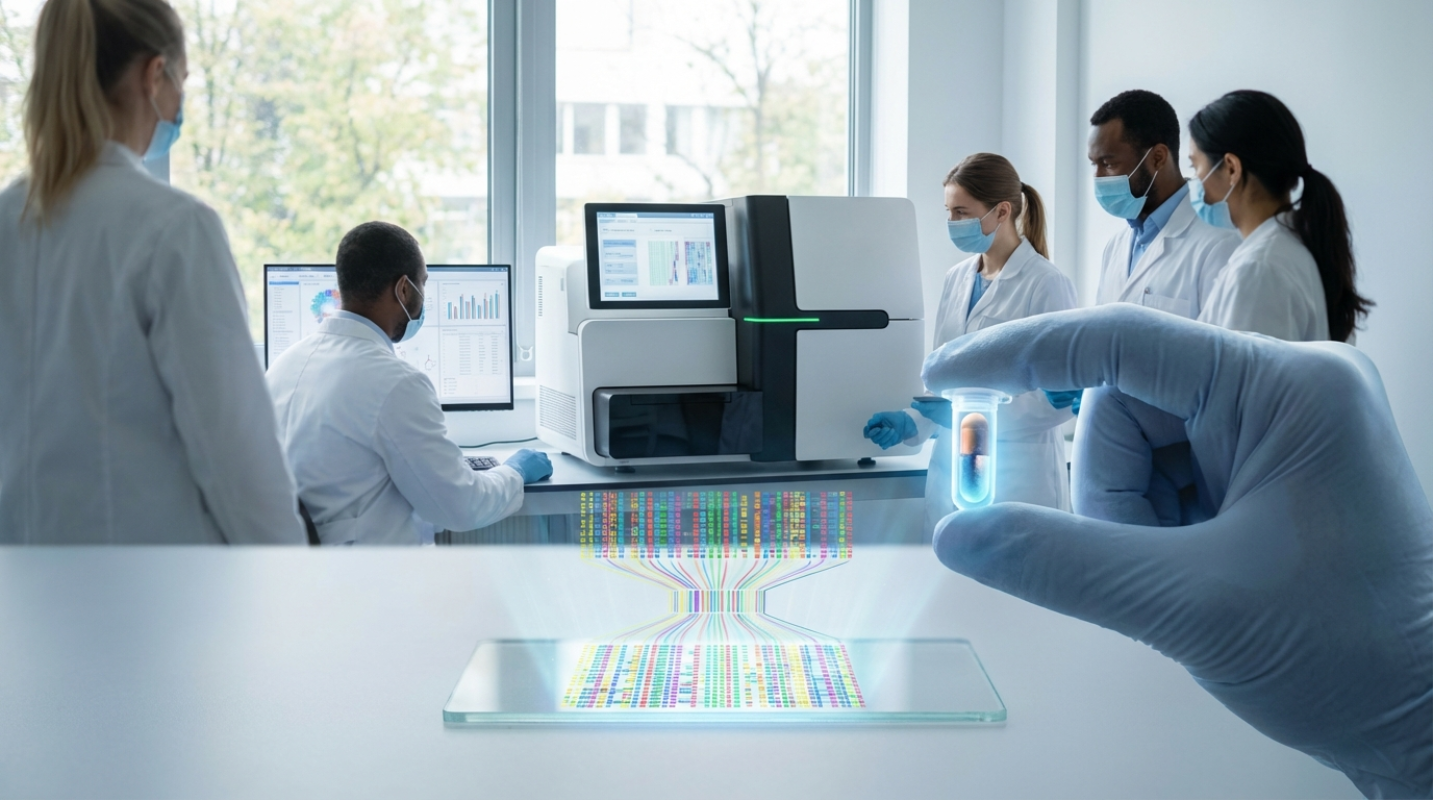
 (Image source: Gemini / Landon Phillips)
 For decades, cancer treatment operated on a simple, if brutally blunt, principle: treat the organ. If you had lung cancer, you received the standard lung cancer protocol. If you had breast cancer, it was the breast cancer protocol. This histology-based approach was the best we had, but it often meant subjecting patients to toxic treatments that had a low probability of success, simply because the underlying biology of their tumor wasn't known. Sound familiar?
That era is ending.
Today, medicine understands that two people with tumors in the exact same location might have cancers that are genetically worlds apart. This realization is the core philosophy of precision oncology: treating the unique molecular drivers of the disease, not just the body part it inhabits.
The important tool enabling this revolution is tumor sequencing. It’s the diagnostic key that transforms cancer management from a game of chance into a highly personalized, targeted approach. When you sequence a tumor, you get an instruction manual for that specific disease, allowing doctors to select drugs designed to hit that tumor's vulnerabilities, and only those vulnerabilities.
The Science Behind Tumor Sequencing: What We Look For
Think of your tumor’s genome as a massive, complex instruction manual—millions of pages long—that has suffered several important typos and edits that turn normal cells into malignant ones. Tumor sequencing is the process of reading that manual to find the specific errors we can exploit.
We’re primarily looking for actionable genomic alterations. These are the specific mistakes that make the cancer grow, spread, or resist chemotherapy.
Reading the Tumor’s Instruction Manual
The process often involves Complete Genomic Profiling (CGP), which typically includes Next-Generation Sequencing (NGS). This technology doesn't just check for one or two common genes; it scans hundreds simultaneously.
What are we hunting for?
- Actionable Mutations: These are point changes in the DNA code, like the notorious KRAS mutation common in pancreatic and colorectal cancers, or the EGFR mutations that drive many non-small cell lung cancers (NSCLC).
- Gene Fusions: These happen when two normally separate genes break and fuse together, creating a new, highly active hybrid protein. ALK fusions are a classic example. We often use RNA sequencing alongside DNA sequencing to spot these fusions more easily.
- Copy Number Variations (CNVs): Sometimes the cancer doesn't change the gene itself, it just makes dozens of extra copies of it, like the amplification of the HER2 gene.
It’s important to note the distinction between somatic and germline mutations. Somatic mutations are acquired by the tumor and are generally what we target for treatment. Germline mutations are inherited, impacting both treatment choice and potentially suggesting a hereditary risk for the patient and their family.
The good news? The vast majority of advanced solid tumors—a staggering 92.0%—harbor at least one potentially therapeutically actionable alteration.¹ This means that for almost every patient, the sequencing report offers a clue.
Translating Data into Therapy: Approved Targeted Treatments
Finding a mutation is one thing; having a drug ready to fight it is another. Luckily, the drug development pipeline is now running directly off the sequencing data, leading to a rapid increase in targeted, effective therapies.
When sequencing works perfectly, it provides a clear roadmap to an FDA-approved drug. Like, if your report shows a BRCA1/2 mutation (often associated with breast or ovarian cancer), your oncologist can prescribe a PARP inhibitor. If you have advanced NSCLC with a specific EGFR exon 19 deletion, you’ll likely receive an EGFR tyrosine kinase inhibitor.
The Rise of Tumor-Agnostic Therapies
Perhaps the most exciting shift is the emergence of tumor-agnostic therapies. These treatments are approved based purely on the molecular profile, regardless of where the cancer started. This is the ultimate triumph of precision medicine over histology.
A prime example is the 2024 tumor-agnostic approval of Enhertu (trastuzumab deruxtecan) for HER2-positive solid tumors. This drug is now available for patients whose tumors show HER2 positivity, whether the cancer originated in the lung, the bladder, or the GI tract. Clinical trials supporting this approval showed objective response rates ranging from 46.9% to 52.9% across various tumor types.⁴
Another recent win came in late 2024 with the approval of Vorasidenib for Grade 2 gliomas driven by IDH1 or IDH2 mutations.⁵ This is a huge step forward for brain tumors, a notoriously difficult area to treat, demonstrating that even rare targets can yield successful therapies.
Although 92% of tumors have an alteration, the rate of finding a match to an on-label, FDA-approved therapy is currently around 29.2%. That’s still nearly one in three patients getting a drug specifically designed for their disease, leading to demonstrably better survival metrics and quality of life. Plus, complete sequencing is important for patients with rare alterations, increasing their enrollment into relevant clinical trials by an incremental 124% compared to standard testing.¹
Challenges and Emerging Frontiers in Sequence-Guided Care
If sequencing is so powerful, why aren’t all advanced cancer patients benefiting from it immediately?
The reality is that translating that genomic data into effective, accessible treatment still faces significant friction. The biggest hurdles aren't scientific; they're logistical and financial.
First, there’s the real-world treatment gap. Despite the high rate of actionable findings, studies show that only about 8% of patients with advanced solid tumors actually receive CGP-guided approved or experimental therapies in routine clinical practice.² That massive gap is where the system breaks down.
The Access and Knowledge Barriers
The primary obstacles cited by physicians in 2024 surveys include
- Reimbursement Challenges: This is the most cited barrier, reported by 87.5% of physicians.³ Getting the test approved, paid for, and then getting the targeted drug approved can take weeks or months, forcing oncologists to start standard chemotherapy while they wait.
- Lack of Physician Knowledge: A reported 81.0% of physicians struggle with the complexity of NGS results.³ Sequencing reports are dense, filled with dozens of variants, many of which are variants of unknown significance (VUS). Interpreting these reports requires specialized expertise, often necessitating Molecular Tumor Boards—groups of experts who meet specifically to discuss complex cases.
The Future is Fluid
To overcome these barriers, two major innovations are rapidly gaining ground.
First, liquid biopsies are becoming indispensable. Instead of relying solely on tissue taken during surgery or needle biopsy (which is often difficult or insufficient), a liquid biopsy uses a simple blood draw to detect circulating tumor DNA (ctDNA). This matters for monitoring treatment response, detecting resistance mechanisms as they emerge, and tracking minimal residual disease (MRD).
Second, Artificial Intelligence (AI) and Machine Learning are stepping in to handle the data overload. AI can rapidly scan massive genomic profiles, compare them against the latest clinical trial data, and suggest the most appropriate targeted therapy or clinical trial match, potentially speeding up the translation process that currently stalls in the hands of overwhelmed human experts.
Making Sequencing Routine, Not Exceptional
The journey of precision oncology has moved past the question of if genomic sequencing is useful. The evidence is a lot of; it is the standard of care for advanced solid tumors. The focus now must shift to implementation—making sure every patient has timely access to complete testing and expert interpretation.
We need to close the gap between the 92% of tumors with identifiable targets and the mere 8% of patients currently receiving matched therapy.² This requires streamlined reimbursement policies and improved education for oncologists and molecular pathologists alike.
The future of personalized cancer management isn't just about finding the mutation; it's about making sure the sequence report is immediately and seamlessly translated into a life-extending treatment plan. That collaboration—between the lab, the geneticist, and the frontline oncologist—is where the real magic happens.
Sources:
1. Real-world clinical utility of complete genomic profiling in advanced solid tumors
2. Current Barriers to Complete Genomic Profiling in Advanced Solid Tumors
3. Physician-Reported Barriers to the Use of Next-Generation Sequencing
4. FDA Approval of Trastuzumab Deruxtecan for HER2-Positive Solid Tumors (DESTINY Trials)
5. FDA Approval of Vorasidenib for IDH1 or IDH2-Mutated Glioma
This article is for informational and educational purposes only. Readers are encouraged to consult qualified professionals and verify details with official sources before making decisions. This content does not constitute professional advice.