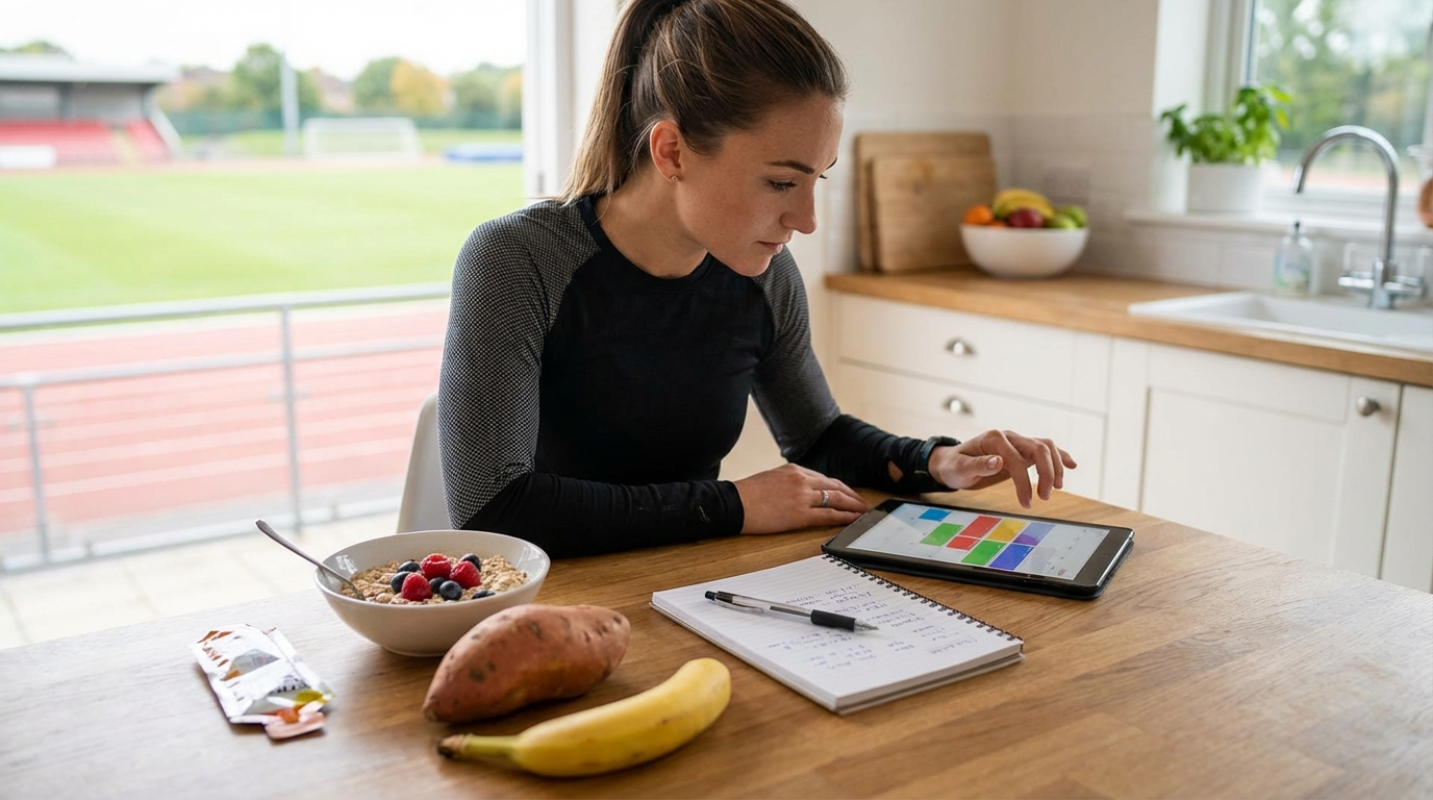
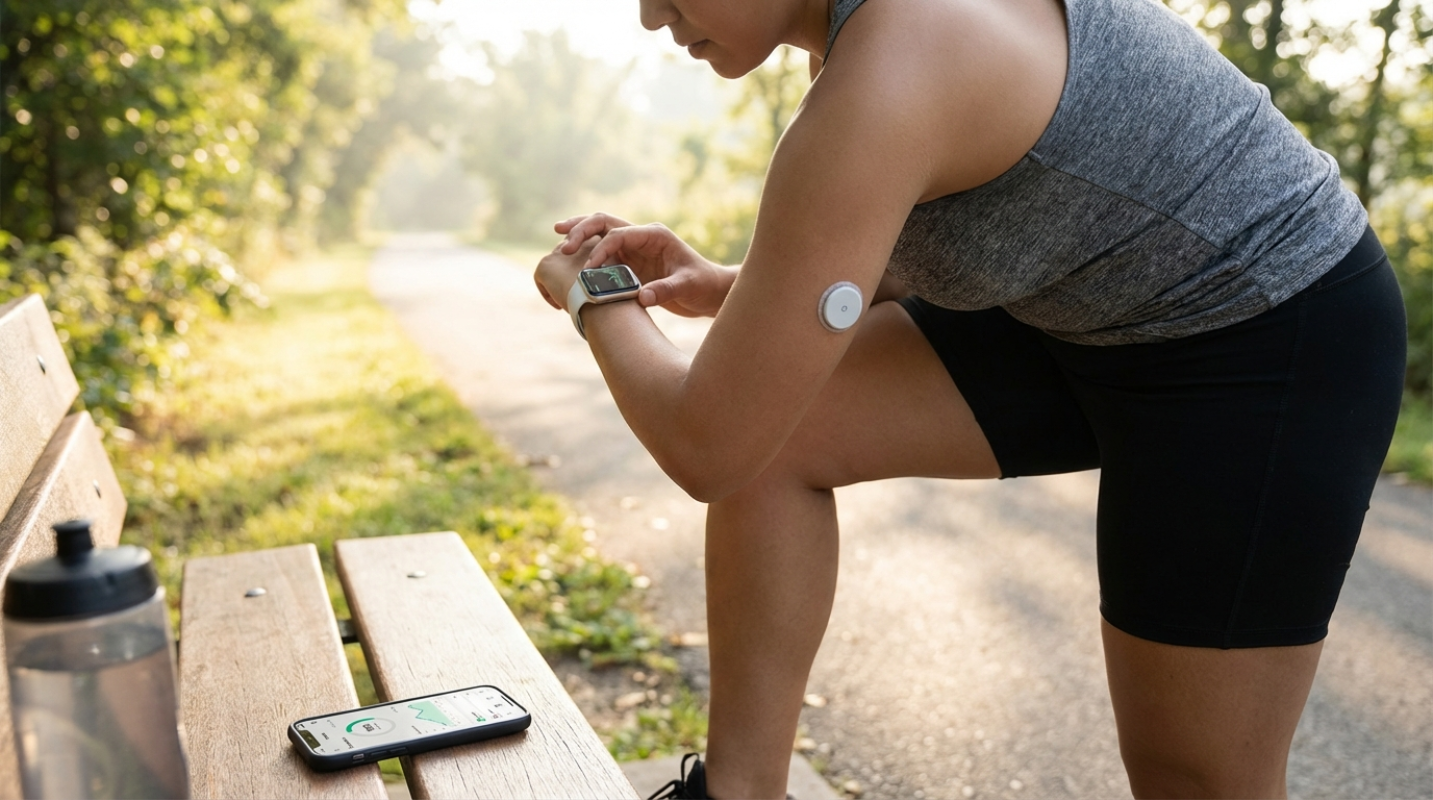
 (Image source: Gemini / Landon Phillips)
 You’ve optimized your macros, perfected your sleep hygiene, and logged countless hours in the gym. But are you still hitting performance plateaus? The missing piece of the puzzle might be hiding in plain sight: your blood glucose (BG). Blood glucose is the body's primary fuel source, the high-octane gas that powers every rep, every mile, and every recovery phase. For decades, BG monitoring was strictly reserved for managing diabetes. But that’s all changed. Thanks to the rise of affordable, user-friendly Continuous Glucose Monitors (CGMs), athletes and fitness enthusiasts are now treating their metabolic data like important training metrics.
Think of traditional finger-prick testing as checking the gas gauge only when the light comes on. A CGM, but is the real-time digital dashboard, showing you exactly how fast you’re burning fuel and predicting when you might run dry.
The science is clear: understanding your individual BG fluctuations is the key to unlocking highly personalized training and nutrition approaches. Although experts maintain a stance of cautious optimism—noting that the direct, causal evidence linking CGM-guided stability to improved performance is still emerging¹—the data offers an unprecedented opportunity to optimize your fueling.
How BG Levels Influence Training Adaptations
Your relationship with glucose isn't static; it’s a dynamic conversation between your diet, your stress levels, and your physical output.
When you train, your muscles demand glucose. If you’re engaging in long, sustained endurance efforts, maintaining adequate BG is paramount. Allowing your levels to dip too low (hypoglycemia) leads quickly to fatigue, poor coordination, and the infamous "bonk." Monitoring prevents this crash by signaling exactly when you need to top up your fuel tank.
But it’s not just about avoiding the low points. Exercise inherently improves your insulin sensitivity, meaning your body gets better at efficiently taking glucose out of the bloodstream and shuttling it into muscle cells. This is a important long-term adaptation for health and performance.
Understanding the Morning Spike
Ever notice your glucose is slightly elevated first thing in the morning, even before you eat? That’s often the dawn phenomenon, where your body releases hormones like cortisol overnight to prepare you to wake up, prompting the liver to dump glucose. If you’re planning an intense fasted morning session, knowing that baseline reading can inform whether you need a micro-dose of carbs or if your body is already running slightly high.
Nutritional Timing Fueling Around Your Glucose Curve
This is where the CGM earns its keep. A one-size-fits-all fueling plan assumes everyone processes carbohydrates identically. We know that’s simply not true. Emerging evidence shows that 24-hour CGM profiles are highly individualized, making a standard fueling plan ineffective⁵.
The primary value of the CGM is providing immediate feedback on your glycemic response to specific foods. This hyper-personalization allows you to stop guessing and start optimizing.
Pre-Workout Fueling Approaches
Your pre-workout meal sets the stage for success or failure. If you consume a high-glycemic carb right before training, you risk a massive glucose spike followed by a rapid crash—the classic sugar rush and burn.
By monitoring your data, you can choose foods based on their BG trends
- Low-Glycemic Carbs: These cause a slow, steady rise, providing stable energy for longer efforts (think oats or whole grains). They help keep you in the best zone.
- High-Glycemic Carbs: These are best reserved for short, high-intensity efforts or when your BG is already trending downward and you need an immediate boost.
Intra-Workout Approach
During intense or long-duration activity, your BG will naturally drop as your muscles consume fuel. The CGM tells you precisely when and how much carbohydrate intake is necessary.
Instead of adhering to a rigid schedule (e.g., "take a gel every hour"), you can use real-time data to guide your intake. If your glucose is stable at 90 mg/dL, you can delay that gel. If it’s plummeting towards 70 mg/dL, you need fuel now. This prevents the energy troughs that limit performance.
Post-Workout Recovery
Recovery is all about replenishing muscle glycogen stores. This requires optimizing the insulin response. Immediately after training, your muscles are highly receptive to glucose uptake. Using your CGM, you can confirm that your post-workout meal—often a mix of protein and fast-acting carbs—is achieving the desired insulin spike to drive nutrients quickly into the muscle cells for repair and replenishment.
CGMs in Practice: Interpreting Your Data for Better Results
It’s easy to get obsessed with the number flashing on your sensor, but true optimization requires looking at the bigger picture. When analyzing your data, you need to focus on three key metrics
1. Time in Range (TIR): The percentage of time your glucose levels spend within a healthy, stable zone (typically 70–140 mg/dL for athletes). The higher the TIR, the more stable your energy supply.
2. Glycemic Variability (GV): This measures the degree of fluctuation. High GV—lots of dramatic spikes and drops—is metabolically stressful and suggests fueling inefficiencies. Low GV indicates smooth sailing.
3. Average Glucose: A straightforward metric, but less useful than TIR and GV for performance.
For non-diabetics, the goal for post-meal peaks is to stay below 140 mg/dL, and ideally under 120 mg/dL³. If you notice a particular pre-race breakfast sends your glucose soaring to 160 mg/dL, you know that meal is causing unnecessary stress and instability that could affect your subsequent performance.
Case Study Snapshot
Imagine two recovery meals: Meal A (high-sugar recovery drink) and Meal B (chicken, rice, and vegetables).
Meal A might cause a rapid spike to 180 mg/dL, followed by a sharp drop below 80 mg/dL within two hours. Meal B results in a gentle, sustained rise to 125 mg/dL and a slow return to baseline. The data clearly shows Meal B provides a more stable metabolic environment for recovery, despite providing similar calories.
To gain these deep insights, you can't just wear the sensor for a weekend. Most experts recommend wearing a CGM for at least two to four weeks to capture enough data across different training loads, stress levels, and meal types². This provides the complete picture needed to change long-term habits.
Top Recommendations for CGM Users
- Wear Duration: Commit to a 30-day wear period. Short-term data is just noise; long-term data reveals patterns.
- Hydration Check: Track your hydration alongside your BG. Dehydration can artificially elevate readings.
- Stress Integration: Note high-stress days (work deadlines, travel) in your log; stress is a potent driver of BG spikes, independent of food.
- Testing Protocol: When testing a new fuel source, eat the exact same meal two days in a row, but perform different activities (e.g., rest day vs. heavy lifting day) to see how exercise modifies your response.
Metabolic Insight: Glucose, Sleep, and Long-Term Health
The scope of BG monitoring extends far beyond the cycling studio or the weight room. It provides a important window into your overall metabolic health.
Poor glucose control overnight, like, is often linked to reduced recovery quality. If your glucose profile is erratic while you sleep, it might indicate that you’re under-fueled from a hard training day or that your stress hormones are elevated. Consistent monitoring can provide early indications of overtraining or negative energy balance.
The increased accessibility of these devices—with several now approved for non-prescription purchase for health and wellness⁴—means that metabolic awareness is now mainstream.
Integrating BG monitoring into your fitness plan isn't about becoming a human robot; it’s about acknowledging your unique physiology. It’s the digital equivalent of having a world-class nutritionist living inside your body, whispering personalized advice about when to eat, what to eat, and how to train. By focusing on stability, minimizing variability, and avoiding performance-limiting crashes, you’re not just optimizing your next workout—you’re investing in long-term metabolic health.
Sources:
2. Continuous Glucose Monitoring for Athletes
3. Continuous Glucose Monitoring for Non-Diabetics: A New Frontier in Metabolic Health Optimization
4. Why Are Non-Diabetic Olympic Athletes Using CGM?
This article is for informational and educational purposes only. Readers are encouraged to consult qualified professionals and verify details with official sources before making decisions. This content does not constitute professional advice.