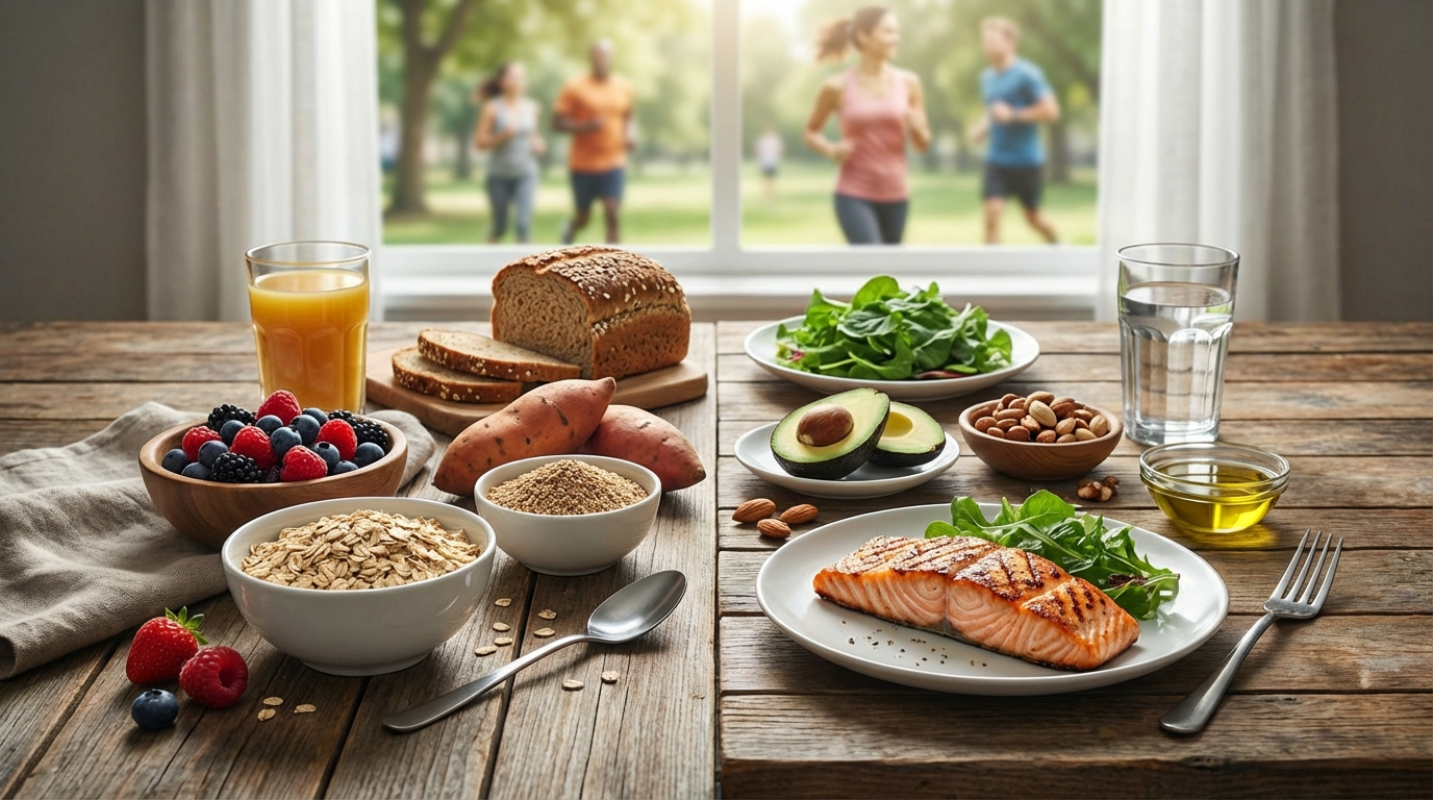
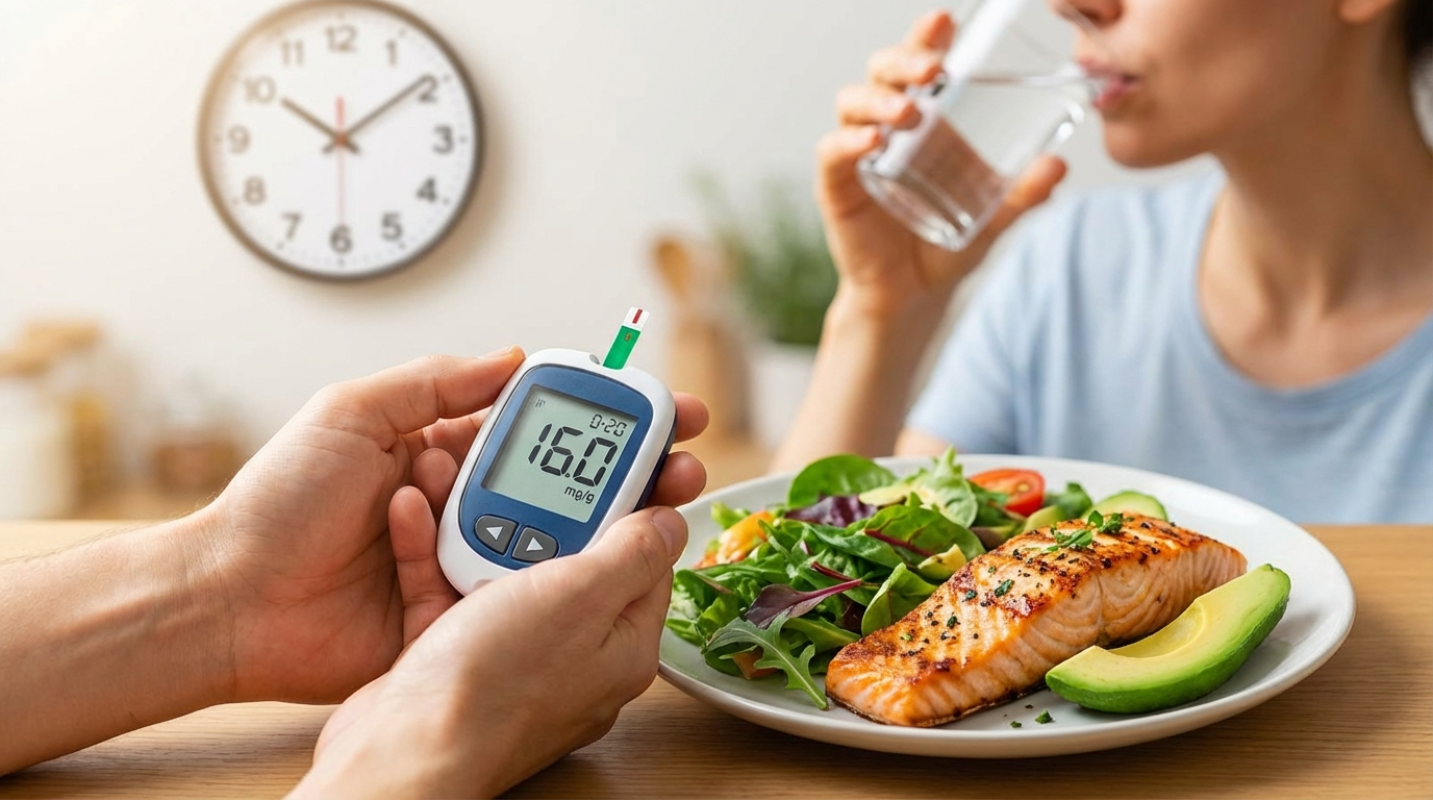
 (Image source: Gemini / Landon Phillips)
 You probably think of your circadian rhythm as just the thing that makes you sleepy at night. But that internal, 24-hour clock does so much more than regulate when you hit the pillow. It governs nearly every physiological process, from hormone release and cell repair to, importantly, how efficiently you metabolize food.
Think of your body as a high-performance computer. The master clock in your brain (the Suprachiasmatic Nucleus, or SCN) is the operating system, but every major organ—your liver, pancreas, and gut—has its own local, peripheral clock. When you eat, you’re not just providing fuel; you’re sending a powerful signal to these clocks, telling them what time it is and what job they should be doing.
When those signals are aligned—when you eat during your body’s naturally active, daylight phase—everything runs smoothly. When they’re misaligned, you invite metabolic chaos. This field, known as chrononutrition, suggests that when you eat is just as important as what you eat. Aligning your meal timing with your internal clock get the most from metabolic health, stabilizes energy, and supports longevity.
Understanding the Circadian System: Clocks Within Clocks
The SCN, the central pacemaker, is primarily set by light. But those peripheral clocks in your digestive system? They are set by food intake. Food is the most powerful zeitgeber (German for "time-giver") for these organs.
During the day, when you are active and light exposure is high, your liver is primed to process nutrients, your pancreas is highly sensitive to insulin, and your gut is ready for digestion. This is your metabolic peak. As the sun sets and your body prepares for rest, these peripheral clocks signal a metabolic slowdown. Insulin sensitivity drops dramatically, and the body shifts from using energy to storing it.
This is why circadian misalignment—the hallmark of modern life—is so dangerous. Eating late at night forces metabolic organs to work when they’re supposed to be resting. It’s like demanding high-speed processing from a computer that’s supposed to be in sleep mode. This misalignment is strongly linked to reduced glucose tolerance, insulin resistance, and an increased risk of adiposity.¹ Sound familiar? That late-night snack isn’t just adding calories; it’s literally confusing your internal operating system.
Core Approach 1: Time-Restricted Eating (TRE) and Anchoring Your Day
If the goal is alignment, the simplest and most effective approach is to condense your eating into a consistent, daily window. This is Time-Restricted Eating (TRE).
TRE isn't about calorie restriction; it’s about timing. By establishing a fixed eating window, you provide a clear, strong signal to your peripheral clocks, allowing them a consistent period of restorative fasting every night.
The Power of Early TRE
Although many people try TRE by skipping breakfast and eating late, the latest research strongly favors Early Time-Restricted Eating (eTRE) for best metabolic health. Expert guidelines recommend limiting daily nutrient consumption to a 6- to 10-hour window that starts shortly after waking.²
Why early? Because your insulin sensitivity is highest in the morning and afternoon. Eating your largest meals when your body is best equipped to handle glucose get the most from metabolic efficiency. Like, a 2025 review highlighted that a 6-hour eTRE window, where the last meal was consumed before 3 p.m., improved insulin sensitivity by approximately 25% in prediabetic men.³
For most people, an 8- to 10-hour window is highly effective and sustainable. A systematic review published in late 2025 concluded that eating windows of this duration, typically ending by early evening, provided best benefits for sleep quality through better circadian synchronization.¹
Establish a Non-Negotiable Stop Time
The most important rule in chrononutrition is establishing a non-negotiable stop-eating time relative to your bedtime. You must avoid eating at least 3 to 4 hours before sleep and generally after 8:00 p.m.⁵ This make sures that the bulk of your digestive work is finished before melatonin production peaks and your body enters its resting phase.
But be careful not to push your window too tight. Preliminary research presented in 2024 revealed that people who restricted their eating to less than 8 hours per day had a 91% higher risk of death from cardiovascular disease compared to those who ate across 12 to 16 hours.⁴ This suggests that while alignment matters, moderation and a focus on consistency (10–12 hours for the general population) are paramount for long-term safety.
Core Approach 2: Optimizing Macronutrient Timing Across the Day
Once you’ve set your window, the next step is optimizing what you eat when within that timeframe. Chrononutrition emphasizes front-loading calories and prioritizing nutrient types based on your body’s daily metabolic demands.
Front-Loading Your Calories
Your metabolic fire burns hottest earlier in the day. Therefore, your largest meal should be breakfast or lunch, not dinner. Clinical guidelines from 2025 recommend consuming 40% to 50% of your daily calories by lunchtime.⁶
Studies show this approach leads to better weight management and improved hormone profiles. Women consuming a high-calorie breakfast (versus a high-calorie dinner) achieved greater weight loss and a 33% reduction in insulin levels.⁴ This is because processing a large meal at 7 a.m. is metabolically less taxing than processing the exact same meal at 7 p.m.
Carbohydrate and Protein Timing
Since peripheral clocks are most sensitive to insulin during the active phase, you should front-load your carbohydrate intake to the morning and early afternoon. This is when your body is best equipped to use that glucose immediately for energy or store it efficiently in muscles.
Protein timing is also important. Prioritizing higher protein intake earlier in the day supports muscle synthesis and provides sustained satiety, helping you manage energy levels and avoid grazing.
In contrast, your dinner should be light and low-carb. If you do consume a dinner, it should make up only 20% to 30% of your daily calories and focus on healthy fats and lean protein. Consuming a heavy, high-carb meal during the biological night leads to worse glucose tolerance and increased fat storage, directly fighting your circadian rhythm.⁷
Practical Application: Integrating Chrononutrition into Modern Life
Adopting chrononutrition isn't about perfection; it's about consistency. The biggest threats to alignment are irregularity and social pressures.
Defeating Social Jetlag
Most people follow a healthy rhythm during the work week, only to throw it all out the window on Friday night with late dinners and weekend sleep-ins. This phenomenon is called social jetlag, and it’s just as disruptive to your metabolism as flying across time zones.
The key is maintaining regular meal timing daily. Even if you shift your wake-up time slightly on weekends, try to keep your first and last meals within an hour of their weekday slots.
Managing Late Events
What if you have a mandatory late work dinner or a social event? You have two main options
1. The Light Dinner Approach: Eat a small, balanced meal (perhaps a protein shake or a light salad) at your normal stop time (e.g., 6:00 p.m.). Then, treat the late event as purely social. If you must consume something, stick to low-calorie, non-alcoholic beverages.
2. The Shift Approach: Shift your entire eating window earlier that day. If you know you’ll be eating at 8 p.m., start your window later (e.g., noon) to maintain your 8-hour total window, making sure you still get that important overnight fast.
Remember, individual variability matters. Morning larks naturally thrive on a very early eTRE schedule, while night owls might need to start their window later (e.g., 10 a.m. to 6 p.m.). Listen to your own chronotype, but always prioritize the overnight fast.
Sustaining Rhythms for Improved Keyity
Chrononutrition offers a powerful yet simple framework for health: establish a consistent eating window and front-load your nutrients.
By mastering these two core approaches: Time-Restricted Eating and optimized macronutrient timing—you move beyond simple calorie counting and start working with your body’s deep, genetic programming. The benefits are substantial: stable energy throughout the day, effortless weight management, and dramatically improved metabolic markers.
When you view food not just as fuel but as a precise timing cue, you gain control over your internal clocks. This consistency is the secret sauce for long-term wellness. Start small. Pick a stop time tonight and stick to it. Your circadian rhythm will thank you.
Sources:
1. Systematic Review on Best Meal Timing and Sleep Quality
2. Chrononutrition Optimizing Individualized Nutrition with Circadian Rhythm
3. Early Time-Restricted Eating and Insulin Sensitivity
4. Risk of Highly Restrictive TRE and Cardiovascular Disease
5. Clinical Guidelines on Late-Night Eating and Metabolic Disruption
This article is for informational and educational purposes only. Readers are encouraged to consult qualified professionals and verify details with official sources before making decisions. This content does not constitute professional advice.