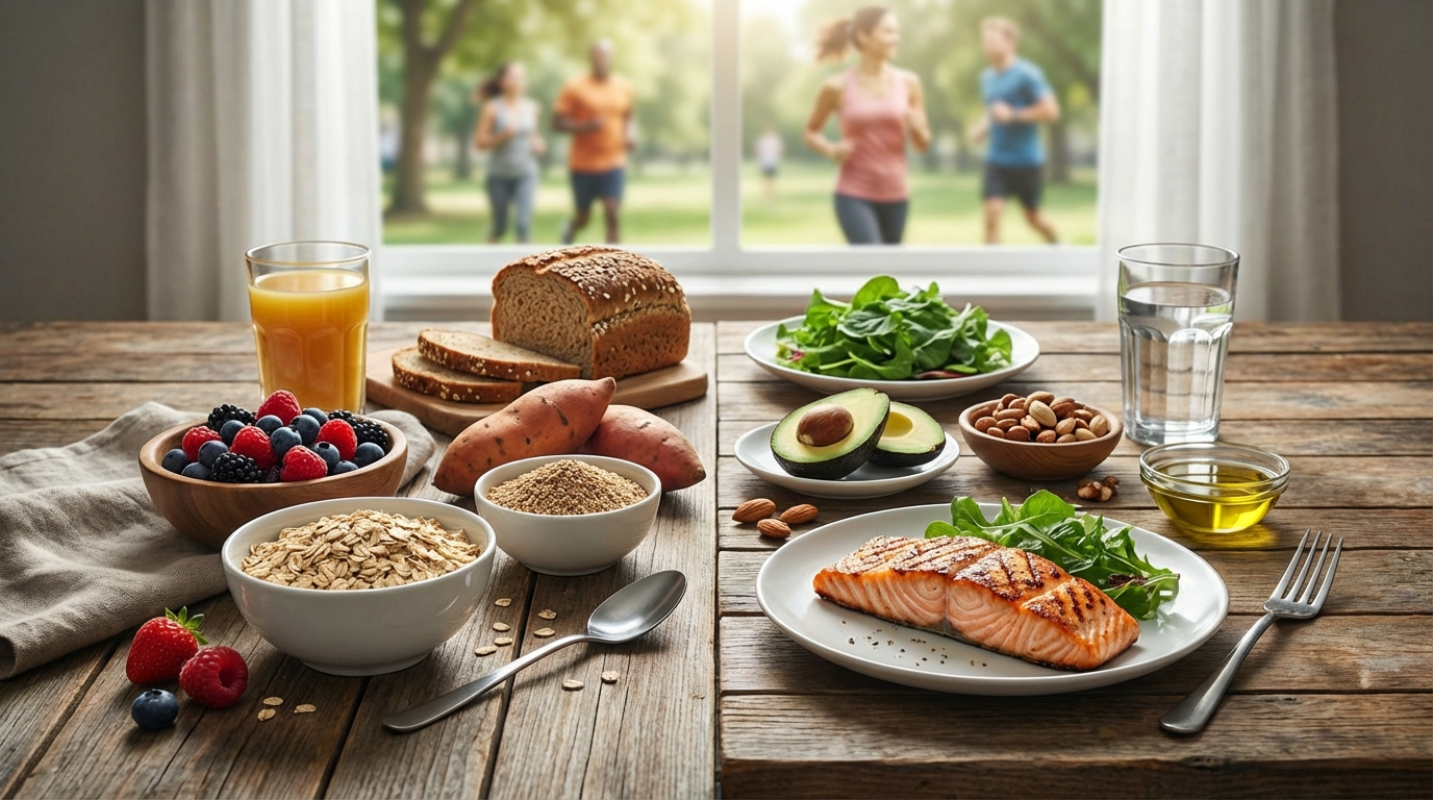
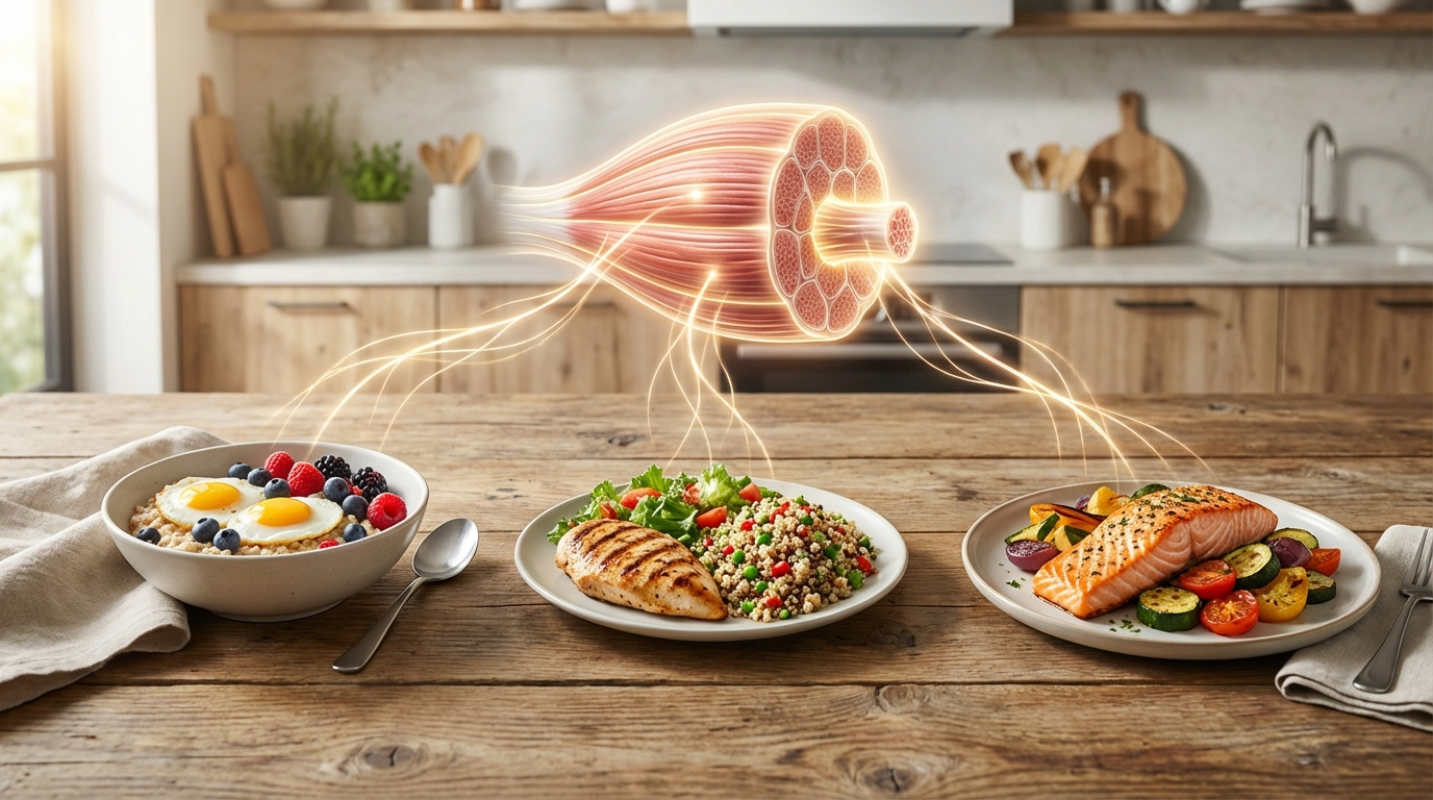
 (Image source: Gemini / Landon Phillips)
 You lift heavy, you track your macros, and you make sure you hit that important daily protein target. You’re doing everything right, or so you think. But if you’re still eating all your protein in two massive, unevenly spaced meals, you might be leaving significant muscle gains on the table. The modern understanding of hypertrophy has shifted. It’s no longer just about the total protein you consume; it’s about when and how you consume it. Getting the most from muscle protein synthesis (MPS) is the real goal, and that requires approach, not just brute force eating.
Why Meal Timing and Distribution Matter for Muscle Synthesis
Muscle Protein Synthesis (MPS) is the process where your body repairs and rebuilds muscle tissue, leading to hypertrophy, or growth. If MPS rates consistently exceed muscle protein breakdown (MPB) rates, you get bigger and stronger.
For years, the fitness world obsessed over the "anabolic window," the supposed 60-minute post-workout period where protein was magically absorbed. Although post-workout nutrition is important, modern science has shown that the true anabolic window spans 24 hours. The goal isn't just to slam a shake after the gym. The goal is to keep MPS maximally stimulated throughout the entire day.
Think of MPS like a gas pedal. You don’t want to floor it once and then let the car roll to a stop; you want to maintain a steady, high speed. Best protein distribution is the key mechanism for achieving that sustained speed. It make sures that the building blocks needed for growth are constantly available, preventing long periods of muscle catabolism.
The Fundamentals: Understanding the MPS Threshold and Leucine Trigger
To get the most from MPS, you have to understand the concept of the muscle protein synthesis threshold. This is the minimum amount of high-quality protein required in a single meal to maximally stimulate the muscle-building process.
Consuming protein below this threshold is not optimal because it doesn’t fully engage the necessary signaling pathways. Consuming far above this threshold is largely inefficient. Once MPS is maximally stimulated, adding more protein doesn't make the process more maximal. That excess protein is typically oxidized for energy or used for other metabolic functions, not building new muscle.
Hitting the Magic Number
For most healthy, young adults, the threshold dose of high-quality protein tends to fall in the range of 20–25 grams per meal. If you are larger, train intensely, or are older, that number climbs.
Older adults, in particular, face a challenge called "anabolic resistance." This means their muscle cells are less sensitive to the protein signal, requiring a heavier dose to get the same MPS response. For those over 65, the recommended per-meal dose often jumps to 30 grams or more.²
The Leucine Trigger
The real driver behind the MPS threshold isn’t just total protein; it’s the specific amino acid Leucine. Leucine is the metabolic signal that activates the mTORC1 signaling pathway, which is the master regulator for muscle growth.
To effectively hit the MPS threshold, you generally need about 3–4 grams of Leucine in that meal. This is why high-quality, complete protein sources like whey, eggs, and meat are prioritized. For older adults battling anabolic resistance, they need a slightly lower Leucine dose (around 2.8 grams) but require a higher overall protein dose (30 grams) to make sure that minimum Leucine threshold is met.²
Distribution Approaches: From Three Meals to Six Spreads
Now that we know the magic number (20–40 grams), the next step is applying that dose strategically throughout the day.
Most people follow a "skewed" pattern. Sound familiar? They might have a tiny breakfast (5–10g), a moderate lunch (15–20g), and then a massive dinner (40–80g).
Research has clearly demonstrated why this pattern is detrimental to getting the most from 24-hour MPS. In one comparison study, researchers directly compared an Even distribution pattern against a Skewed pattern. The Even group consumed doses of around 30 grams at breakfast, lunch, and dinner. The Skewed group consumed very little protein early in the day and dumped over 60 grams into dinner.
The result was striking: the Even distribution group showed a 25% higher 24-hour mixed muscle protein fractional synthesis rate compared to the Skewed group.⁷ This tells us that two or three separate stimulations of MPS are far less effective than four or five evenly spaced, threshold-hitting doses.
The 3–4 Hour Rule
To sustain elevated MPS, the consensus points toward consuming that best protein dose across at least four meals per day, spaced roughly 3–4 hours apart. This frequency prevents the MPS rate from dropping back down to baseline between feedings.
If you are aiming for the high end of daily protein intake (say, 2.2 grams per kilogram of body weight) and you weigh 90 kg, your total daily intake is 198 grams. Spreading that across four meals means 49.5 grams per meal, which is likely above the maximal threshold. In this case, increasing your frequency to five or six feedings (33–40 grams per meal) becomes necessary to avoid wasting those valuable amino acids.
Case Studies and Expert Consensus: What the Latest Research Recommends
The key takeaway from sports nutrition societies like the ISSN in 2026 is a move toward strategic protein ingestion, built upon a foundation of adequate total intake, which is generally 1.6 to 2.2 grams of protein per kilogram of body weight per day for adults engaging in resistance training.¹
Recent research has highlighted specific times of the day that are often overlooked but offer massive anabolic opportunities.
Don't Skip Breakfast
For many adults, breakfast is the protein wasteland, filled with cereal or toast. Studies now suggest that adding a threshold dose of protein to the first meal of the day significantly improves MPS and may improve long-term body composition.⁵ If you’re only getting 10 grams of protein at 7 AM, you’ve already missed your first anabolic signal of the day.
The Overnight Anabolic Opportunity
Another important window is right before bed. Since you fast for 6–8 hours overnight, MPS rates decline. Ingesting a slow-digesting protein, like casein, immediately prior to sleep is an effective approach to stimulate and sustain MPS rates throughout the overnight fasting period.⁹ This effectively turns your sleep hours into growth hours.
Practical Implementation: Building Your Optimized Protein Schedule
The science is clear: we need to hit 25–40 grams of protein every 3–4 hours. So what does this look like in your real life?
Here’s a practical schedule built around a typical training day
1. Meal 1 (Breakfast, 7:00 AM): 30g Protein (e.g., eggs, yogurt, or protein shake).
2. Meal 2 (Mid-Morning, 10:30 AM): 30g Protein (e.g., cottage cheese or bar).
3. Meal 3 (Lunch, 1:30 PM): 30g Protein (e.g., chicken and rice).
4. Meal 4 (Pre/Post Workout, 5:00 PM): 30g Protein (e.g., shake or light meal).
5. Meal 5 (Dinner, 8:30 PM): 30g Protein (e.g., steak or fish).
6. Meal 6 (Pre-Sleep, 10:30 PM): 30g Protein (e.g., casein shake or Greek yogurt).
Top Recommendations for Hitting the Threshold
The biggest challenge isn't knowing the rules; it's following them. Eating six full meals a day is often impractical due to time constraints and satiety issues. This is where strategic supplementation becomes invaluable.
The Shift in Mindset
Ultimately, optimizing your protein intake requires a fundamental shift in mindset. You must stop seeing protein as a single daily goal - like a box you check off before midnight - and start seeing it as a series of important, time-sensitive signals.
The difference between two large, scattered protein meals and five evenly distributed, threshold-hitting doses might not seem huge acutely, but compounded over months and years, the impact on your muscle mass and body composition is substantial. You’re not just eating enough; you’re activating growth at every possible opportunity.
Sources:
1. Optimizing Muscle Protein Synthesis: A Guide to Daily Protein Intake
2. Best protein distribution per meal for muscle protein synthesis
4. Dietary protein distribution and muscle protein synthesis
5. Adding Protein to the First Meal of the Day Improves Muscle Protein Synthesis in Older Adults
This article is for informational and educational purposes only. Readers are encouraged to consult qualified professionals and verify details with official sources before making decisions. This content does not constitute professional advice.