 (Image source: Gemini / Landon Phillips)
 Asthma is one of those chronic conditions that sounds manageable on paper, yet consistently trips up millions of people worldwide. Despite decades of advanced pharmaceuticals, poor control remains a massive problem. If you live with asthma, you know the cycle: you feel fine for weeks, maybe months, and then bam—a sudden flare-up sends you scrambling for your reliever.
The core issue? We often rely on highly subjective data. When your doctor asks how often you used your inhaler last month, what do you say? "Oh, maybe once or twice a week." That vague recollection is the foundation upon which your entire treatment plan rests.
Current guidelines, like those from the Global Initiative for Asthma (GINA), define well-controlled asthma based on minimal symptoms, few nighttime awakenings, and low reliance on rescue medication. But achieving that status requires consistent adherence to inhaled corticosteroids (ICS). This is where the gap appears. We know that up to 70% of people misuse or underuse their controller medication. This isn't a moral failing; it’s a data problem, and that’s precisely what smart inhalers are designed to fix. They are the digital bridge between subjective memory and objective reality.
Decoding Smart Inhaler Technology & How Data Collection Works
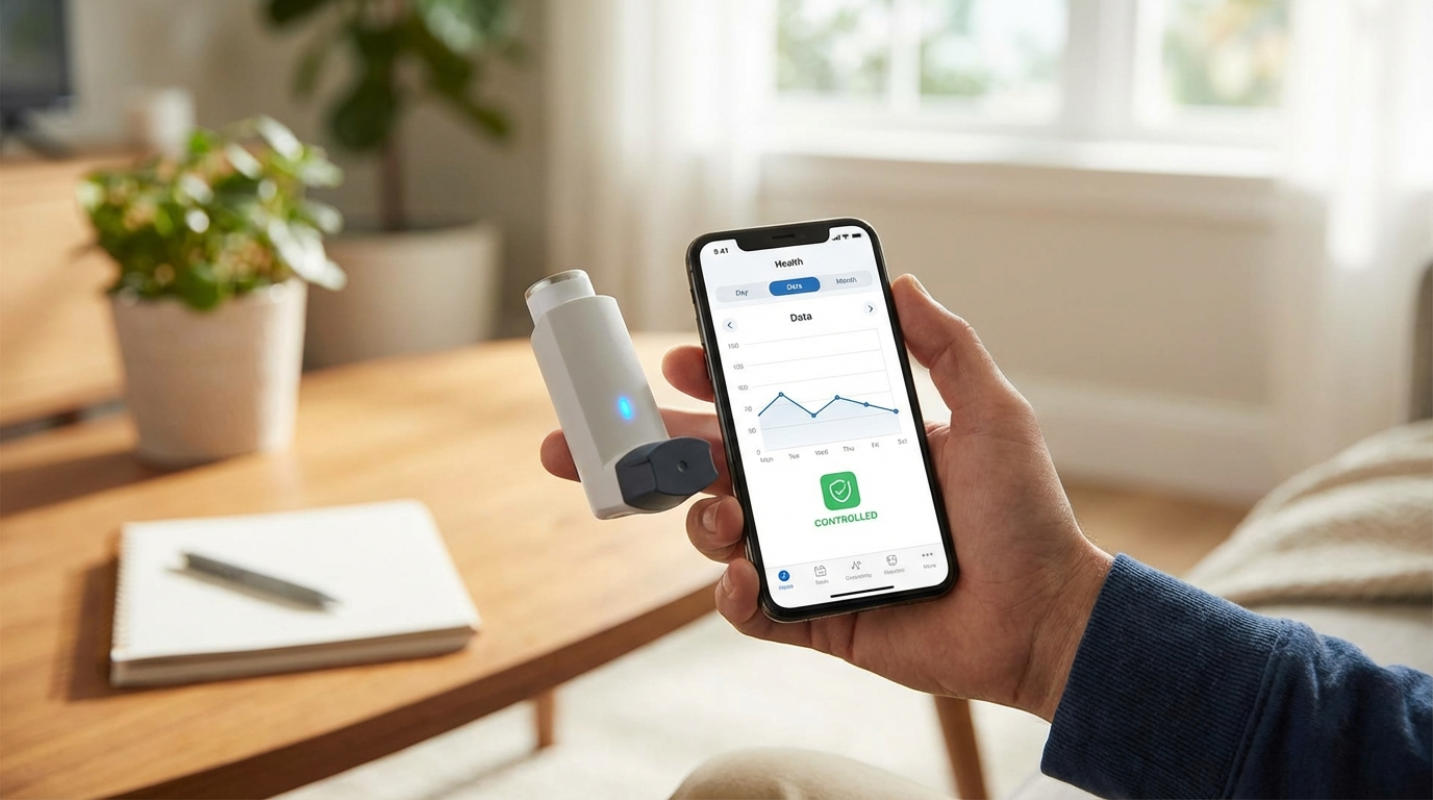
So, what exactly is a smart inhaler? It's not a new drug delivery system; it’s a standard inhaler with a detachable sensor clipped onto it. Think of it as fitting a fitness tracker onto your medication.
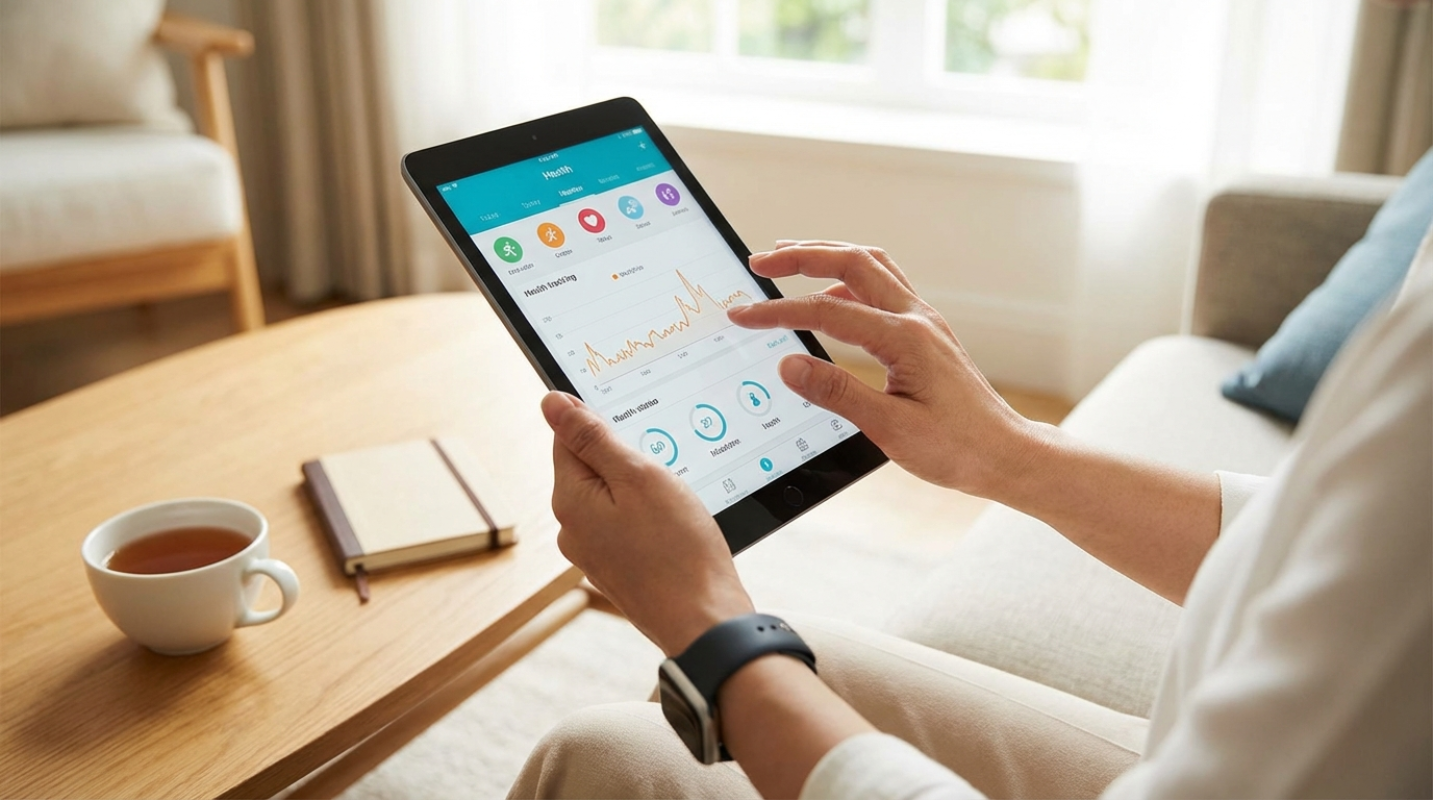
These sensors are miniature marvels. They track the exact date and time the medication was actuated. Using Bluetooth connectivity, this data instantly flows to a companion app on your phone, and then securely to the cloud.
The types of data collected go far beyond simple adherence rates. Yes, they track if you took your dose and when, but they also capture important context. Some advanced systems can measure the quality of the inhalation—was your peak inspiratory flow adequate? They can also integrate with location data to identify environmental triggers. Did you take your rescue inhaler five times in an hour right after walking past that heavily pollinated park? That’s actionable data.
This technology completely shifts the model. Instead of relying on your best guess during a rushed 15-minute appointment, clinicians get a complete, objective timeline of medication usage. It’s the digital equivalent of having a hidden camera monitoring your compliance, only it’s HIPAA-compliant and incredibly useful.
Objective Metrics for Asthma Control Evaluation
The true power of smart inhalers lies in turning raw data into meaningful metrics that directly evaluate control.
First and foremost is adherence analysis. Most people overestimate their medication adherence; smart inhalers don't lie. Recent systematic reviews confirm that when patients are monitored and receive feedback, adherence rates soar. We’re talking about moving from a typical adherence rate of 66% in control groups to a mean rate of 88% in intervention groups using reminders and feedback.¹ This dramatic jump is the difference between uncontrolled and well-controlled asthma.
Next, look at rescue medication use. The short-acting beta-agonist (SABA) is your alarm bell. Overuse is the single biggest predictor of future exacerbations. Smart inhalers flag not just how many times you hit the SABA button, but the pattern of usage. One study showed that patients using a digital inhaler system decreased their reliever use by 38.2% over 24 weeks simply because they and their doctor could see the data.³
This objective data also dramatically improves the accuracy of traditional tools, like the Asthma Control Test (ACT) score. Although ACT scores are useful, they are a snapshot in time. When combined with continuous data streams, clinicians can see if your ACT score improvement is genuine and sustained, or just a temporary bump. In fact, studies show that digital inhalers help improve the ACT score by a mean difference of 0.63, cementing their role as effective control tools.²
Clinical Benefits of Enhancing Patient-Provider Communication
Imagine a doctor’s appointment where the conversation starts not with "How have you been?" but with, "I see you missed three doses last week, and you used your rescue inhaler every Tuesday around 4 PM. What were you doing then?"
This level of precision fundamentally changes the patient-provider dynamic. Clinicians use aggregated data dashboards to identify specific behavioral flaws or trigger correlations, allowing for personalized treatment adjustments. If the data shows perfect adherence but increasing SABA use, the doctor knows the dose needs stepping up. If adherence is poor, the focus shifts to education or simplifying the regimen.
But we need to be realistic about adoption. Despite the clear benefits, integrating smart inhalers into routine clinical care faces significant barriers.
For clinicians, the primary hurdle is workflow integration and data overload. Continuous monitoring generates massive streams of data, and there's uncertainty about who is clinically responsible for reviewing every single alert. Experts point out that the time commitment required for healthcare professionals (HCPs) to set up and monitor these systems is a major barrier to widespread use.⁵
For patients, cost and access matter issues. Smart inhaler sensors and platforms aren't cheap, often costing upwards of £100 per device, and insurance coverage can be spotty.⁵ Plus, we must acknowledge the digital literacy gap—not everyone has a compatible smartphone, reliable Wi-Fi, or the comfort level necessary to manage continuous data reporting.
Integration, AI, and Precision Control
The immediate future of smart inhalers is focused on making the data less burdensome and more predictive.
We are quickly moving toward seamless integration with Electronic Health Records (EHRs) and telehealth platforms. The goal is to eliminate manual data entry and make sure that the important adherence and usage patterns are automatically available within the patient’s chart, minimizing the administrative burden on doctors.
The real game-changer, though, is Artificial Intelligence (AI). By applying machine learning to the massive datasets generated by thousands of users, AI can identify subtle shifts in dosing patterns that precede a severe exacerbation. Like, a slight, sustained increase in SABA use over three days—even if the patient feels fine—might trigger a predictive alert, allowing for prophylactic intervention before the attack even starts.
This is the promise of precision medicine in asthma management.
It’s an important development, especially considering how often we miss simple opportunities for better care. The GINA 2024 Report strongly recommends the use of Single Maintenance and Reliever Therapy (SMART), but studies presented at the 2024 American Thoracic Society International Conference found that only about 14.5% of eligible adult patients actually receive this guideline-recommended regimen.⁴ Smart technology can help close this important gap by making sure that, when the best therapy is prescribed, adherence is get the most from.
Smart inhalers aren't just a fancy accessory; they are rapidly becoming the needed tool for achieving best, sustained asthma control. They help patients with visibility into their health and equip clinicians with the objective data necessary to finally move beyond guesswork. If we prioritize seamless integration and accessibility, these devices won't just monitor asthma; they'll help eradicate uncontrolled asthma entirely.
Sources:
3. Digital Inhaler Devices in the Management of Asthma
4. Study Finds Smart Combination Inhaler Regimen for Asthma Treatment Is Under-Prescribed
5. Digital Inhalers in the Management of Asthma: Barriers and Drivers for Implementation
This article is for informational and educational purposes only. Readers are encouraged to consult qualified professionals and verify details with official sources before making decisions. This content does not constitute professional advice.