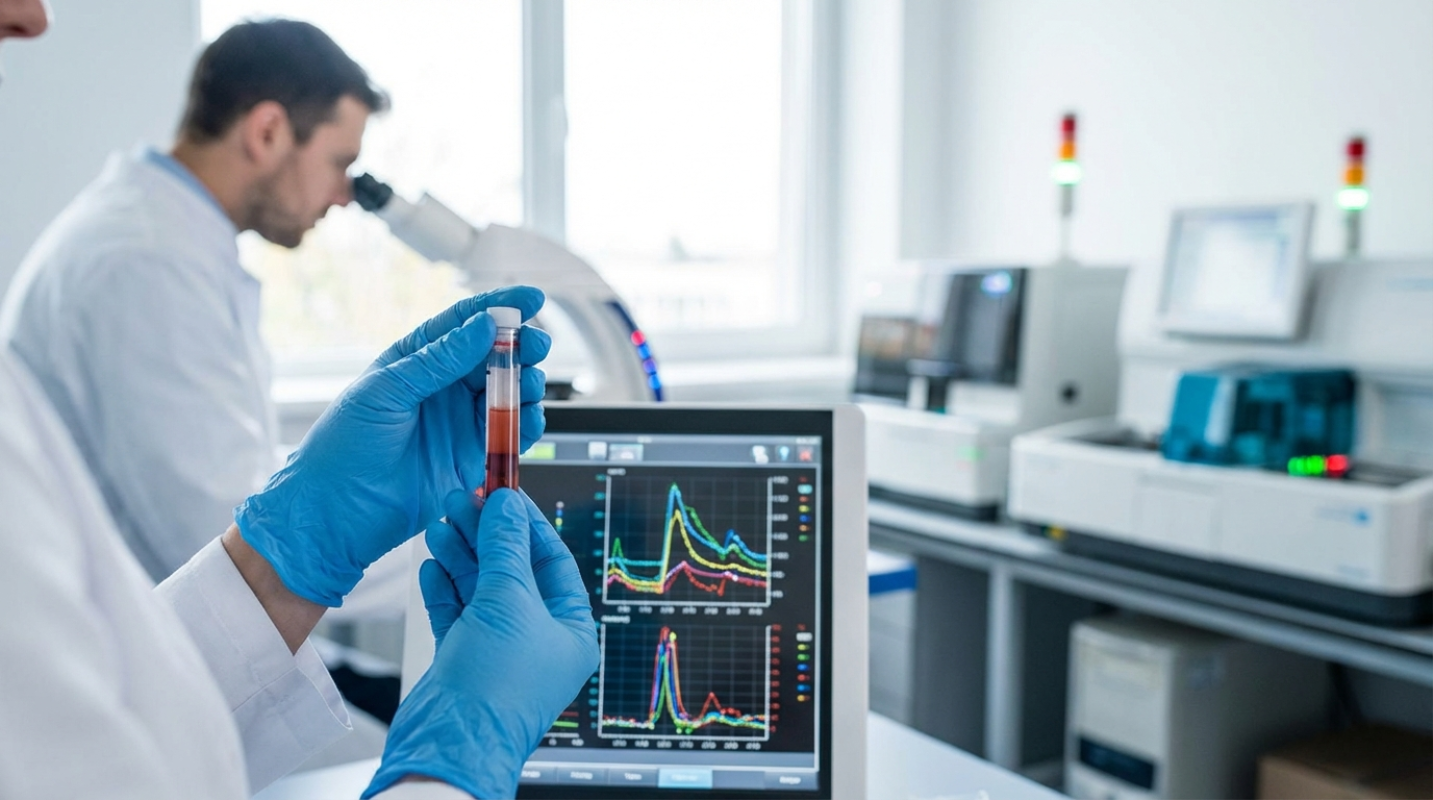
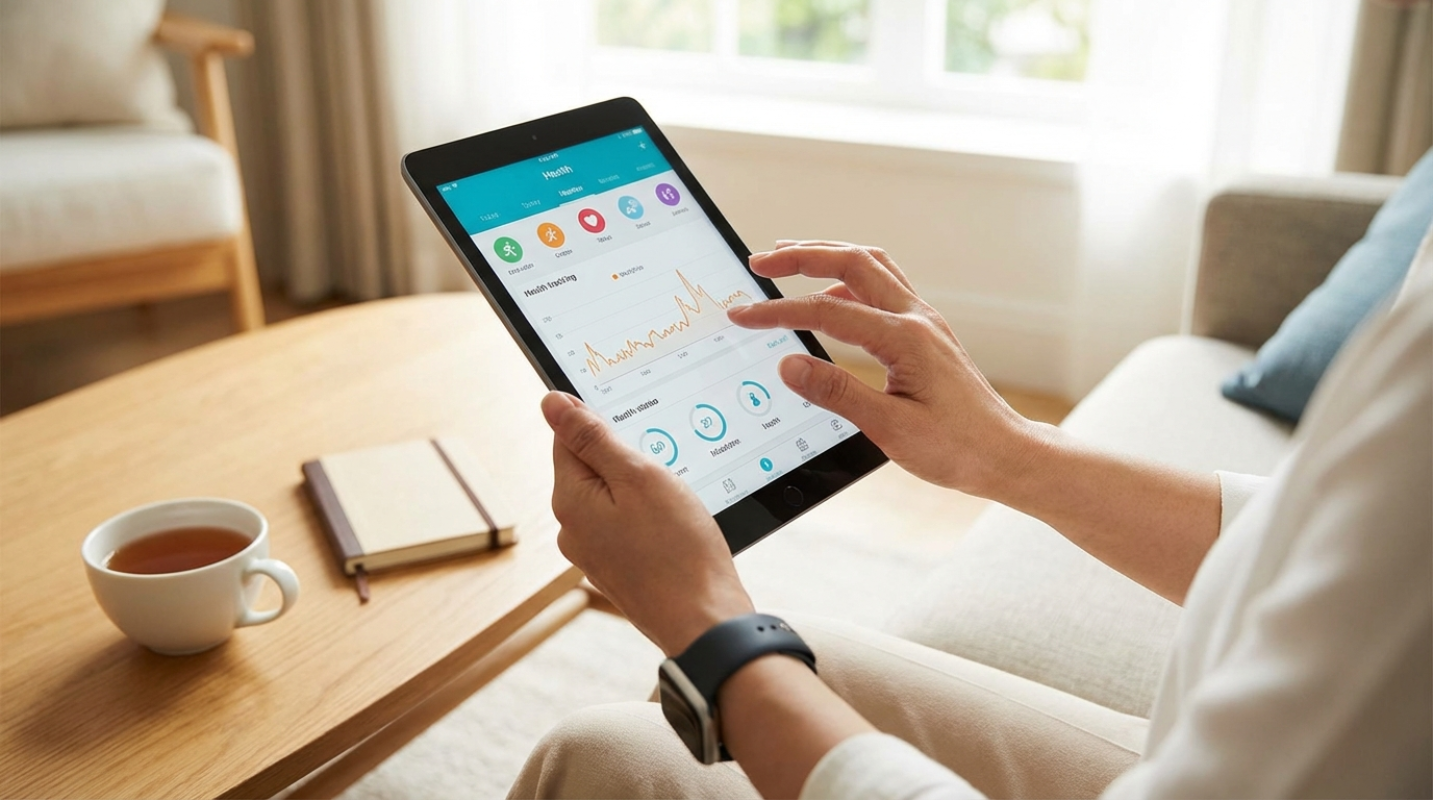
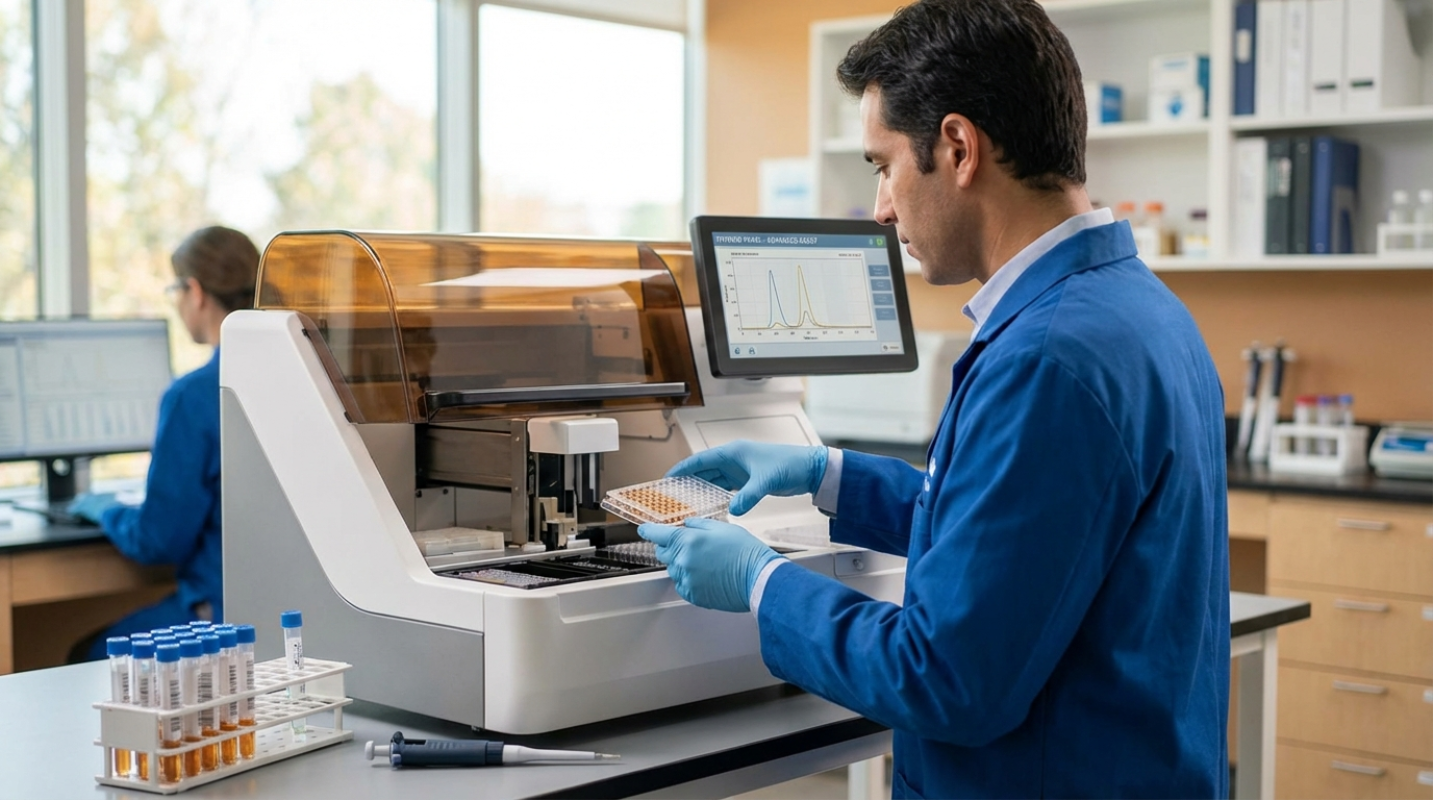
 (Image source: Gemini / Landon Phillips)
 If you’ve ever had your thyroid checked, you know the drill: the doctor orders a Thyroid-Stimulating Hormone (TSH) test. For decades, TSH has been the ultimate gatekeeper, the single number determining whether your thyroid gland—the small, butterfly-shaped organ governing your metabolism—is working correctly.
But TSH is just the beginning of the story.
The truth is, relying solely on TSH is like trying to diagnose engine failure by just checking the gas gauge. Although needed for screening, TSH often fails to capture the subtle, complex, or autoimmune-driven disorders that leave patients feeling exhausted, anxious, or confused, even when their numbers are technically "normal."
The good news? We’ve moved far beyond the basics. Advanced assays, combining next-generation immunoassays with cutting-edge molecular diagnostics, are now offering unprecedented accuracy. They don't just tell you if you have a problem; they tell you why, allowing for truly personalized care.
Refining the Core: Next-Generation Immunoassays for Hormone Measurement
When we talk about advanced thyroid detection, we first have to refine the fundamentals. That means getting the most accurate read possible on the key hormones: TSH, Free T4 (FT4), and Free T3 (FT3).
The standard immunoassays used in most labs are far better than they used to be, but they still struggle with consistency. Why? Because the measurements can be easily influenced by binding proteins in your blood, leading to significant inter-assay variation. Studies show that FT4 and FT3 results can differ by over 20% between different testing methods¹. That’s a massive difference that could shift a patient from "subclinical" to needing treatment.
Going Beyond the Standard Panel
To combat this variability, endocrinologists are relying on two key approaches.
First, they’re combining data points. Although TSH is powerful, recent analysis shows that testing TSH and FT4 together dramatically improves diagnostic sensitivity and specificity, reaching 98% for both, compared to TSH alone². You need the full picture, not just one hormone’s perspective.
Second, they’re demanding precision via the reference standard: Liquid Chromatography-Tandem Mass Spectrometry (LC-MS/MS).
LC-MS/MS is the gold standard because it physically separates and measures the molecules, making it immune to the binding protein interference that plagues standard immunoassays. If you have persistent symptoms of hypothyroidism but your routine labs look normal, asking for LC-MS/MS testing might be the key. Studies using this high-precision method have found that a significant portion of people classified as having "subclinical hypothyroidism" by standard tests actually have hormone levels low enough to be reclassified as clinically hypothyroid⁷.
Finally, we’re recognizing that "normal" isn't one-size-fits-all. New research, especially in 2024 and 2025, emphasizes the need for age-specific normal reference ranges for TSH and FT4. What’s normal for a 30-year-old simply isn’t the same for an 80-year-old⁶.
Molecular Diagnostics: Unmasking Genetic and Functional Causes
Although hormone measurement is important for function, molecular diagnostics are needed for structure—specifically, when dealing with thyroid nodules and the risk of cancer.
The biggest headache in thyroid cancer detection is the indeterminate nodule. When a fine-needle aspiration (FNA) biopsy is performed, 20% to 30% of results fall into the ambiguous Bethesda categories (III or IV)⁵. Clinicians hate this gray zone. Do you watch and wait? Or do you recommend surgery for what might be a benign growth?
This is where advanced molecular assays step in as an indispensable adjunct to traditional cytology.
NGS and the Indeterminate Nodule
Molecular profiling platforms use Next-Generation Sequencing (NGS) to analyze the genetic material extracted during the FNA. They look for specific mutations, gene fusions, and expression patterns that strongly correlate with malignancy.
Think of it this way: traditional cytology is looking at the cells’ shape. Molecular testing is reading the cells’ DNA instruction manual.
- Afirma Genomic Sequencing Classifier (GSC)
- ThyroSeq
- ThyGeNEXT and ThyraMIR
These commercial assays are primarily used to rule out malignancy in those indeterminate nodules. By providing a high negative predictive value, they allow surgeons to confidently avoid unnecessary thyroidectomies in thousands of patients. This saves time, money, and prevents the patient from needing lifelong hormone replacement therapy.
Prognosis and Targeted Therapy
But molecular profiling is doing more than just reducing surgery rates. It’s fundamentally changing treatment plans.
The 2025 American Thyroid Association (ATA) guidelines are expanding recommendations for targeted therapies based on specific molecular variants³. If the assay identifies fusions like NTRK, RET, ALK, or BRAF mutations in a malignant nodule, the clinician can guide the patient toward specific systemic treatments, particularly if the cancer is aggressive, metastatic, or resistant to radio-iodine.
Molecular information is no longer just diagnostic; it’s prognostic. It helps determine the appropriate extent of surgery and assesses the long-term risk of recurrence.
The Digital Edge: AI and Precision Interpretation
The amount of data generated by advanced assays—from dozens of hormone measurements to hundreds of gene variants—is enormous. To make sense of it all, technology is turning to artificial intelligence (AI) and machine learning (ML).
ML models are trained on vast datasets of patient symptoms, hormone levels, and clinical outcomes. They can spot subtle patterns that a human clinician might miss. Like, a recent study demonstrated that a specific ML model (a Gradient Boosting Classifier) using TSH, FT3, and FT4 levels achieved an accuracy of 99.76% for thyroid disease classification⁴.
So what does this actually mean for you? It means that in the near future, your physician won't just look at whether your TSH is 3.5 or 4.5. They will feed your complete panel—hormones, antibodies, family history, and perhaps even environmental factors—into an AI that provides a highly accurate, personalized risk profile and treatment recommendation. It’s the digital equivalent of having a dozen specialized endocrinologists review your case simultaneously.
Top Recommendations for Diagnostic Planning
When discussing advanced testing with your healthcare provider, remember that precision matters. Focus on these key areas for a complete picture
- If Symptoms Persist Despite Normal TSH: Discuss the use of LC-MS/MS for highly accurate FT4/FT3 measurement, especially if you suspect interference from other medications or conditions.
- For Autoimmune Investigation: Make sure that advanced antibody assays, including TPO Ab (Thyroid Peroxidase Antibody) and TRAb (TSH Receptor Antibody), are included to clearly differentiate between Hashimoto’s, Graves’ disease, and non-autoimmune causes.
- For Indeterminate Nodules: Ask specifically about molecular profiling adjuncts like Afirma or ThyroSeq. These tools can prevent unnecessary surgery ⁵.
Personalized Medicine: The Next Evolution of Thyroid Care
The sophisticated diagnostic tools available today are fundamentally reshaping the management of thyroid disorders. We are moving away from treating a single TSH value and toward treating the whole patient, based on a complete molecular and hormonal profile.
This embrace of advanced assays leads to earlier, more precise diagnoses, which translates directly into tailored treatment pathways. Whether it’s confirming a subclinical diagnosis that required the precision of LC-MS/MS, or avoiding a pointless surgery thanks to NGS analysis, the benefits are clear.
The future of endocrinology isn’t just about new medicines. It’s about using these sophisticated diagnostic insights to make sure that every patient receives the exact care they need, precisely when they need it. The era of the one-size-fits-all thyroid panel is officially over.
Sources:
2. The diagnostic power of combined TSH and FT4 measurements
3. 2025 ATA Management Guidelines for Adult Patients with Differentiated Thyroid Cancer (DTC)
4. Improved Diagnosis of Thyroid Diseases through Advanced Machine Learning Methodologies
5. Molecular Markers in Fine Needle Aspiration of the Thyroid
This article is for informational and educational purposes only. Readers are encouraged to consult qualified professionals and verify details with official sources before making decisions. This content does not constitute professional advice.