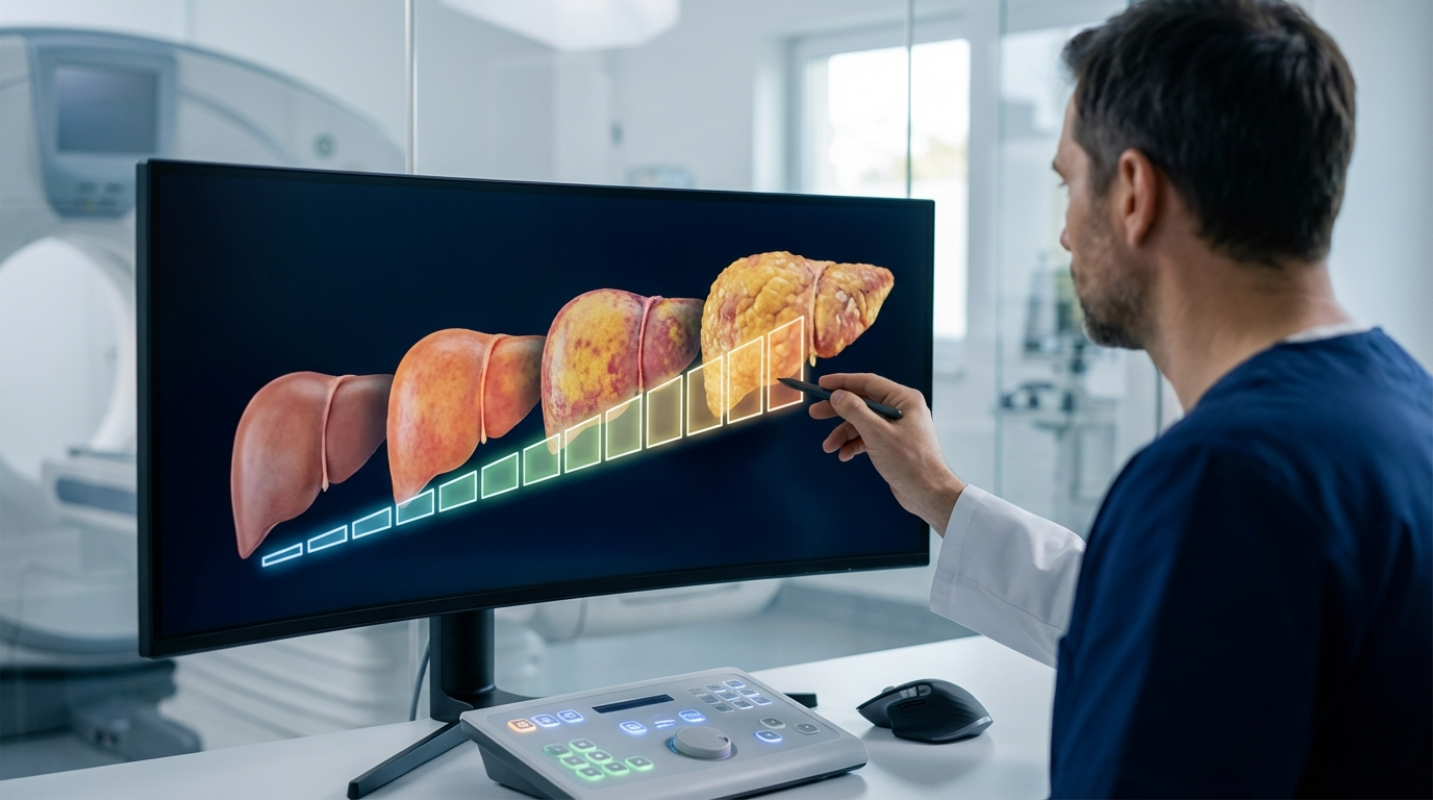
 (Image source: Gemini / Landon Phillips)
 If you live with an autoimmune condition—whether it’s Rheumatoid Arthritis (RA), Lupus, or Multiple Sclerosis (MS)—you know the drill. Things are stable, you’re feeling good, and then, without warning, the storm hits. A flare isn’t just a bad day; it’s a period of intense, system-wide inflammation that can cause irreversible damage, sideline your life, and necessitate aggressive, reactive treatment.
This unpredictability is arguably the most frustrating element of autoimmune disease management. For too long, medicine has been forced to play catch-up: waiting for symptoms to peak before adjusting medication. It’s a reactive model, and frankly, it’s inefficient and damaging.
But what if we could see the storm coming?
That’s the promise of biomarker analysis. By using advanced technology to analyze specific molecules in your blood, urine, or cerebrospinal fluid, clinicians are gaining the ability to forecast disease activity days, weeks, or even months before you feel the first twinge of pain or fatigue. The emerging biomarker panels aren’t just giving us data; they’re offering personalized, actionable insights that allow for preemptive intervention. This shift from reaction to prediction is poised to transform chronic care.
The Biomarker Space: What Are We Measuring and Why?
When we talk about biomarkers, we’re talking about measurable indicators of a biological state. Historically, the go-to indicators for inflammation were simple ones: C-Reactive Protein (CRP) and Erythrocyte Sedimentation Rate (ESR). These are still important, but they’re blunt tools. They tell you that inflammation is happening, but they rarely tell you where it is or why it started, and they often spike too late to prevent a full-blown flare.
To truly predict a flare, we need more detail. We need to look at the multi-omics space.
This involves moving beyond just general inflammatory markers and diving deep into the specific proteins, metabolites, and cellular signals that govern your immune system.
- Proteomics The large-scale study of proteins. This allows us to track thousands of different proteins simultaneously, looking for small shifts in immune signaling molecules like cytokines (e.g., IL-6, TNF-α) or disease-specific autoantibodies.
- Metabolomics The study of small molecules, or metabolites, which are the end products of cellular processes. Changes in amino acid or lipid metabolism can signal that immune cells are shifting into an active, destructive state.
Think of traditional markers like a single thermometer in a large city. Multi-omics, integrated with sophisticated machine learning, is the digital equivalent of a nationwide network of weather satellites, pressure sensors, and Doppler radar. It provides a complete, high-resolution picture. The main challenge? Distinguishing the signal of a specific autoimmune flare from the noise of general inflammation caused by a common cold or a bad night’s sleep.
Case Studies in Prediction: Biomarkers Across Major Autoimmune Conditions
The most exciting advances come from applying these sophisticated omics techniques to specific conditions, yielding highly predictive panels.
Systemic Lupus Erythematosus (SLE)
Lupus is notorious for its unpredictable path, often causing severe damage to key organs like the kidneys (lupus nephritis). There is an urgent clinical need for better predictors.
Researchers are finding success by focusing on proteomics. Like, a longitudinal study using advanced proteomics identified a specific 5-protein panel that, when combined with clinical data, achieved a predictive accuracy of AUC = 0.769 for forecasting a flare within the next year.¹, ² This level of accuracy is a massive leap forward for proactive care.
Plus, the integration of transcriptomics and AI has led to commercial tools like the LuGENE® blood test, which launched in early 2024 to help clinicians forecast flares and tailor drug targets, providing decision support right in the clinic.⁴
Rheumatoid Arthritis (RA)
In RA, the goal is often to predict relapse in patients who are currently in remission. Knowing which patients are likely to fail therapy allows doctors to adjust treatment preemptively, saving joints from damage.
Using a complete serum proteome panel, researchers employed an XGboost machine learning algorithm to analyze hundreds of proteins. This AI model successfully classified patients in remission who would relapse within 12 months with an impressive AUC of 0.80 using only baseline serum proteomics.⁶ This demonstrates that the subtle molecular changes preceding joint inflammation are detectable long before the patient reports pain.
Multiple Sclerosis (MS)
For MS, the focus is on monitoring neuroaxonal damage. The biomarker Neurofilament light chain (NfL), which leaks into the cerebrospinal fluid and blood when neurons are injured, has become a standard measure of disease activity.
More recently, proteomics has identified new players. Elevated levels of Glial Fibrillary Acidic Protein (GFAP) and Ubiquitin C-terminal Hydrolase 1 (UCHL-1) are now validated as significant predictors of Progression Independent of Relapse Activity (PIRA).⁷ This means that even if a patient isn't having a traditional relapse, these markers can signal ongoing, silent neurodegeneration, allowing for earlier, more aggressive intervention. A multivariate proteomic panel, the MSDA Test, also saw real-world validation in early 2025, proving its utility in differentiating clinically stable versus highly active patients.⁵
From Data to Action: Integrating Predictive Biomarkers into Clinical Pathways
So, you have a complex multi-marker panel. Now what? The real magic happens when this data is interpreted and acted upon.
First, you need longitudinal monitoring. Your baseline is unique. What constitutes a "normal" level of IL-6 for the general population might be dangerously high for you, or vice versa. By establishing an individual’s normal range, clinicians can spot deviations much earlier than by comparing you to population averages.
This is where Artificial Intelligence (AI) and Machine Learning (ML) become indispensable. No human doctor can reliably interpret a panel of five proteins, thirty metabolites, and a handful of clinical risk factors simultaneously. AI algorithms, but excel at identifying the subtle, complex patterns that precede a flare. They rank performance, optimize combinations, and output a simple, actionable risk score.
The resulting clinical approach is called Pre-Flare Intervention. Instead of waiting for a swollen joint or kidney distress, a rising predictive score triggers a planned, temporary increase in immunosuppression, a steroid pulse, or an adjustment to the biologic drug dose. The goal is to stomp out the inflammation while it’s still a smoldering fire, not a raging inferno.
Top Recommendations for Autoimmune Management
- Discuss Multi-Omics Testing with Your Specialist Ask your rheumatologist or neurologist if they are integrating advanced proteomic or metabolomic tests, particularly if you have struggled with unpredictable flares.
- Establish a Personalized Baseline Work with your care team to track traditional inflammatory markers (CRP, ESR) and any available advanced panels when you are in remission. This data matters to spotting meaningful changes later.
- Embrace Longitudinal Monitoring Understand that the value of these tests is not in a single snapshot, but in the trend over time. Regular testing provides the data necessary for AI models to accurately predict your risk.
The Next Generation of Predictive Diagnostics
The journey doesn’t stop with proteomics. The next wave of predictive diagnostics is focusing on even smaller, more sensitive indicators.
Emerging targets include circulating cell-free DNA (cfDNA) and microRNAs (miRNAs). These tiny genetic fragments, released by damaged or dying cells, can serve as highly sensitive early indicators of organ-specific injury—like a kidney about to fail in a Lupus patient—before traditional markers even budge.
Expert consensus is clear: the future of autoimmune care lies in a multi-dimensional biomarker system that integrates genomics, proteomics, and metabolomics. This is the only way to overcome the lack of sensitivity and specificity that plagued conventional approaches. The challenge now is practical—standardizing these complex tests, making sure their cost-effectiveness, and validating them rigorously across the incredibly diverse patient populations who suffer from these diseases.
But the shift is undeniable. As clinical trials continue to validate these multi-marker panels—like the recent 2025 validation studies demonstrating the utility of MS proteomic panels⁵—we are moving rapidly toward a future where managing autoimmunity won't be about reacting to damage, but skillfully preventing it. That’s a future worth fighting for.
Sources:
3. LuGENE® Blood Test for Lupus Flares
5. Researchers discover new biomarker to predict multiple sclerosis progression
This article is for informational and educational purposes only. Readers are encouraged to consult qualified professionals and verify details with official sources before making decisions. This content does not constitute professional advice.