 (Image source: Gemini / Landon Phillips)
 If you manage patients with heart failure (HF), you know the drill. It’s a chronic condition affecting millions, and it’s notoriously unpredictable. One day, your patient feels fine; the next, they’re in the emergency room struggling for breath. That rapid worsening—decompensation—is the primary driver of HF mortality and, frankly, the biggest headache for the healthcare system.
The cost of this unpredictability is staggering, both in human lives and dollars. Hospital readmissions for HF are frequent, expensive, and often preventable.
For years, we’ve relied on reactive monitoring. We wait for the patient to feel symptoms—fatigue, weight gain, swollen ankles—and then we try to adjust medications. But what if we didn’t have to wait?
The model is shifting. Thanks to advancements in remote physiologic data (RPD), we are moving from reactive firefighting to proactive prevention. We are catching the subtle, pre-symptomatic shifts that signal impending trouble, transforming how we manage this complex disease.
The Power of Remote Physiologic Data: What We're Measuring Now
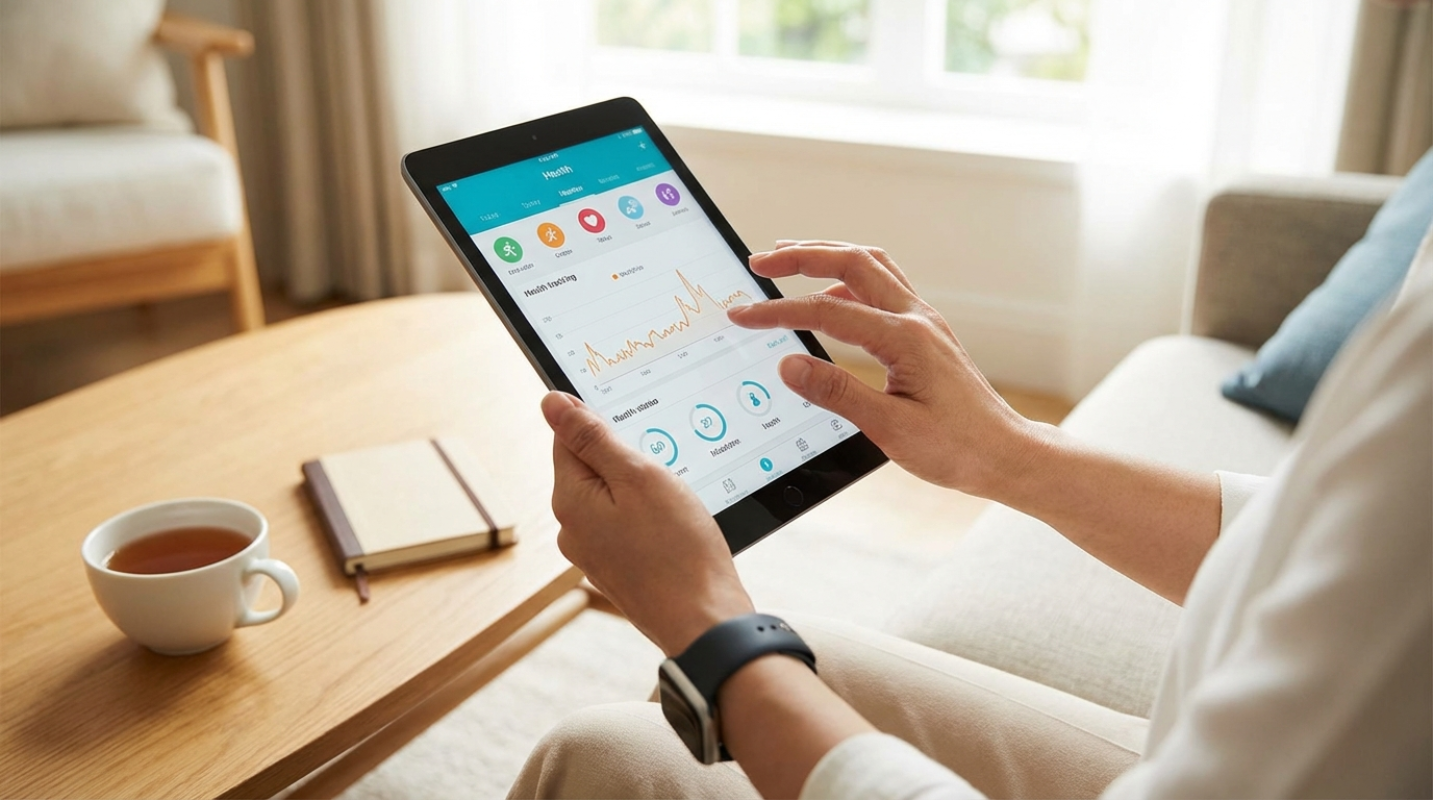
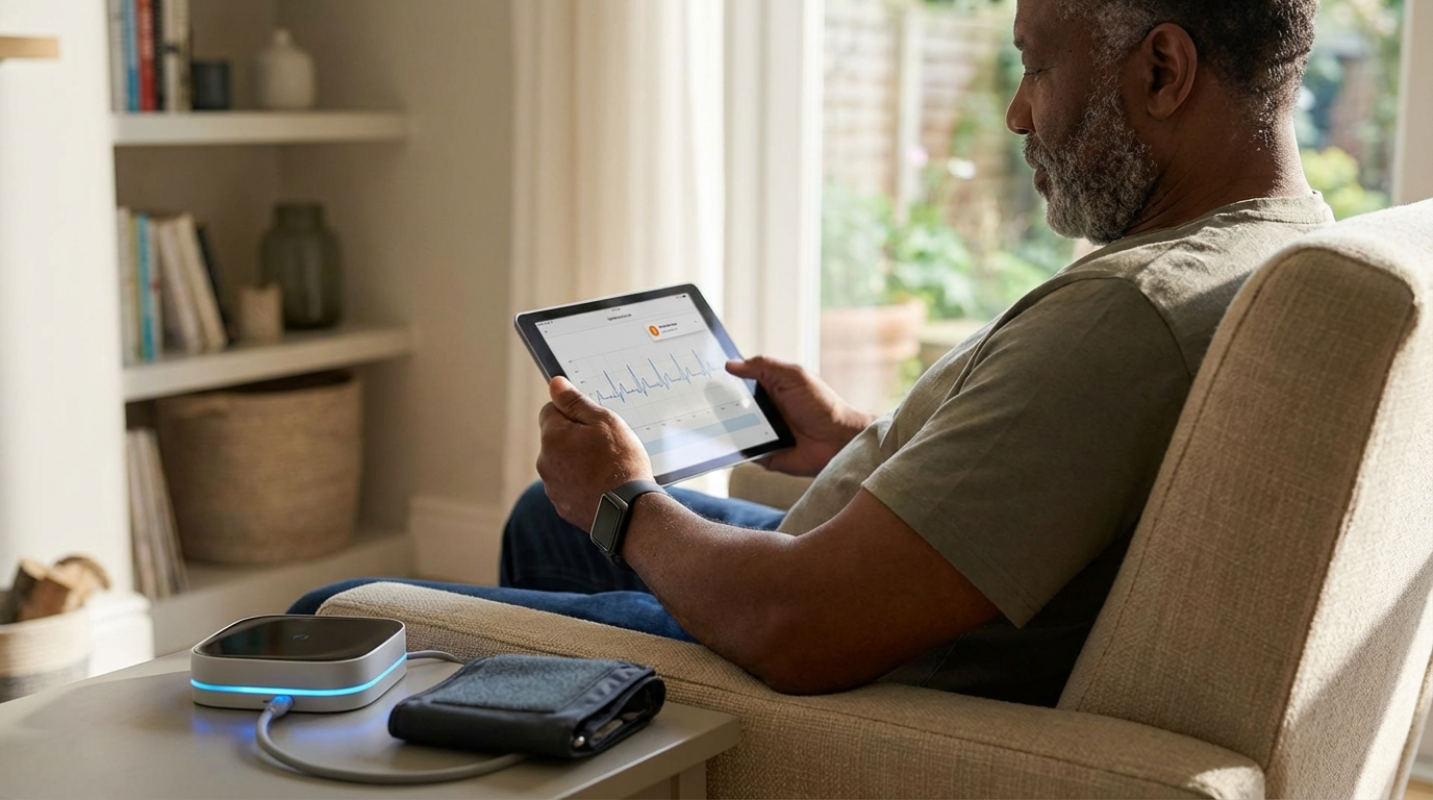
Remote physiologic monitoring isn't just about handing a patient a blood pressure cuff and hoping they use it. Today's RPD systems are sophisticated, multi-sensor platforms that paint a continuous, high-definition picture of your patient’s health, 24/7.
Think of traditional in-clinic monitoring as taking a single snapshot. It’s useful, but it misses everything that happens between appointments. RPD, on the other hand, is the full-length movie.
What key data streams are we tracking?
- Weight Changes The classic sign of fluid retention, but now monitored daily via connected scales.
- Thoracic Impedance This is perhaps the most important early warning sign. Measured through implantable devices or external patches, this metric tracks electrical resistance across the chest, which drops when fluid builds up in the lungs—often weeks before the patient feels congested.
- Activity Levels and Sleep Patterns Sudden decreases in daily steps or significant disruptions in sleep quality can flag subtle worsening.
- Advanced Metrics This includes heart rate variability (HRV) and, in some cases, invasive monitoring of pulmonary artery pressure (PAP) via devices like CardioMEMS, which has been shown to cut HF hospitalizations by 33%.⁴
By using smart scales, wearable patches, and connected medical devices, we gather data that reflects the patient’s real-world condition, not just their rested state during a 15-minute clinic visit.
Algorithms and AI: Turning Data Noise into Actionable Insights
Continuous data streams generate massive amounts of information. If a clinician had to sift through every data point manually, they'd quickly drown in noise. This is where Artificial Intelligence (AI) and machine learning (ML) become absolutely needed.
The core function of these advanced algorithms is to establish a personalized, individual baseline for every patient. They learn what’s "normal" for your patient, not just the general population average.
Once the baseline is set, the AI flags subtle deviations that, when grouped together, indicate impending trouble. It’s a pattern recognition game that humans simply can’t win at this scale.
The results are powerful. Algorithms like HeartLogic analyze data from multiple implanted sensors to generate a risk index. When that index crosses a threshold, the system alerts the clinical team. This technology has a 70% sensitivity in predicting HF events and, importantly, provides an average lead time of 34 days for intervention.⁵
Think about that intervention window. An entire month to adjust diuretics or other therapies before the patient is drowning in fluid.
The technology isn't limited to hardware, either. Novel applications, such as the Cordio HearO mobile app, analyze voice recordings daily, using acoustic biomarkers to predict HF events with 71% accuracy approximately three weeks in advance.⁶ The future of detection is truly everywhere.
Clinical Validation and Real-World Impact: Evidence for the Shift
The evidence supporting RPD is no longer theoretical; it’s validated by real-world outcomes. Studies published in the last two years confirm that RPD dramatically reduces the acute burden of heart failure.
In one striking retrospective study, patients enrolled in an RPD program saw an 83% drop in heart failure hospitalizations and a 93% decrease in HF emergency room visits.⁷
This massive reduction in acute care utilization is the direct result of the early intervention window RPD provides. When a clinician receives an alert that a patient’s thoracic impedance is dropping and their weight is creeping up, they can initiate a telemedicine consult, increase a diuretic dose, or schedule an urgent lab test. They are acting on risk, not waiting for crisis.
Beyond the clinical benefits, the economic argument is undeniable. An ACO cost analysis found that enrolling HF patients in an RPD program led to a 52% reduction in the total cost of care per patient per month, primarily by avoiding those expensive hospital and post-hospital expenses.³ This cost efficiency is why organizations like the American College of Cardiology (ACC) now view remote monitoring as "important to patient care."¹
The Future is Integrated: Seamless Care Pathways
RPD is rapidly transitioning from a specialized tool to a standard component of cardiovascular care. The next big hurdle isn't the data collection—it's the integration.
For RPD to truly succeed, the data generated by smart scales and sensors must flow seamlessly into Electronic Health Records (EHRs) and clinical workflows. Clinicians shouldn't have to log into a half-dozen different portals; the actionable alerts need to appear exactly where they manage their patients.
This shift also helps the patient. When you give them the tools to see their own data—their daily weight, their activity levels—they become active participants in their self-management, leading to better adherence and engagement.
Top Recommendations for RPD Adoption
If you're looking to integrate RPD into your practice, the key is choosing platforms that prioritize data integration and actionable alerts over raw data volume.
- Choose Multi-Parametric Systems Don't rely on just one key sign. Look for systems that integrate weight, blood pressure, and activity at minimum.
- Prioritize AI-Driven Alerts Focus on solutions that use ML to create baselines and minimize alert fatigue. False alarms burn out staff quickly.
- Secure EHR Integration Make sure the system can push actionable summaries and alerts directly into your existing charting system.
Remote physiologic data isn't just a technological marvel; it's the defining feature of high-quality, preventive heart failure management. It’s giving time back to clinicians and, more importantly, life back to patients. This isn't just the future of HF care. It's the standard we should be holding ourselves to right now.
Sources:
1. ACC Releases Guide to Remote Patient Management
2. The State of Remote Patient Monitoring: Developments for 2024
3. Remote Patient Monitoring in the United States 2025 Space
4. Remote Monitoring for Heart Failure: Revolutionizing Patient Management and Outcomes
5. MultiSENSE Study Validation of the HeartLogic Algorithm
This article is for informational and educational purposes only. Readers are encouraged to consult qualified professionals and verify details with official sources before making decisions. This content does not constitute professional advice.