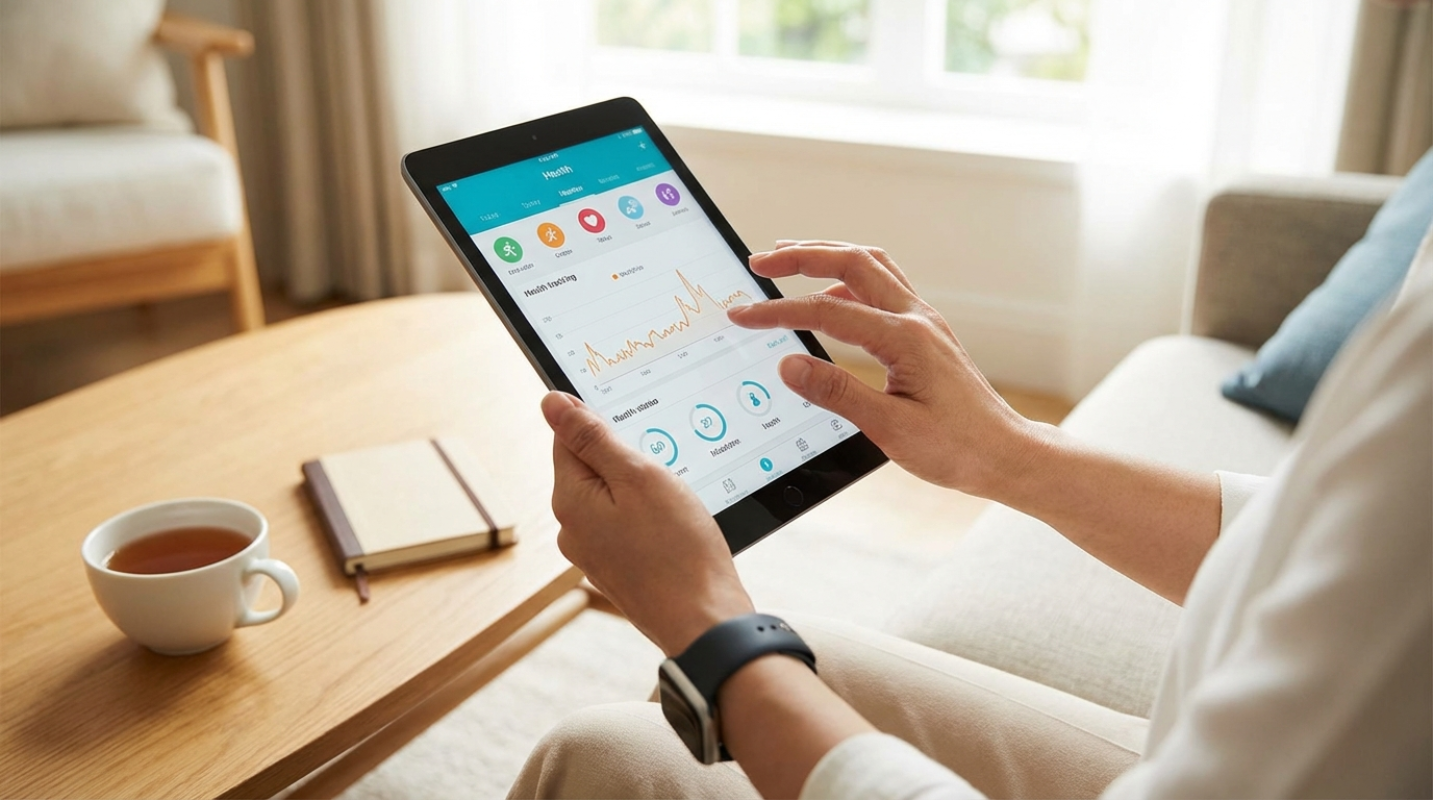
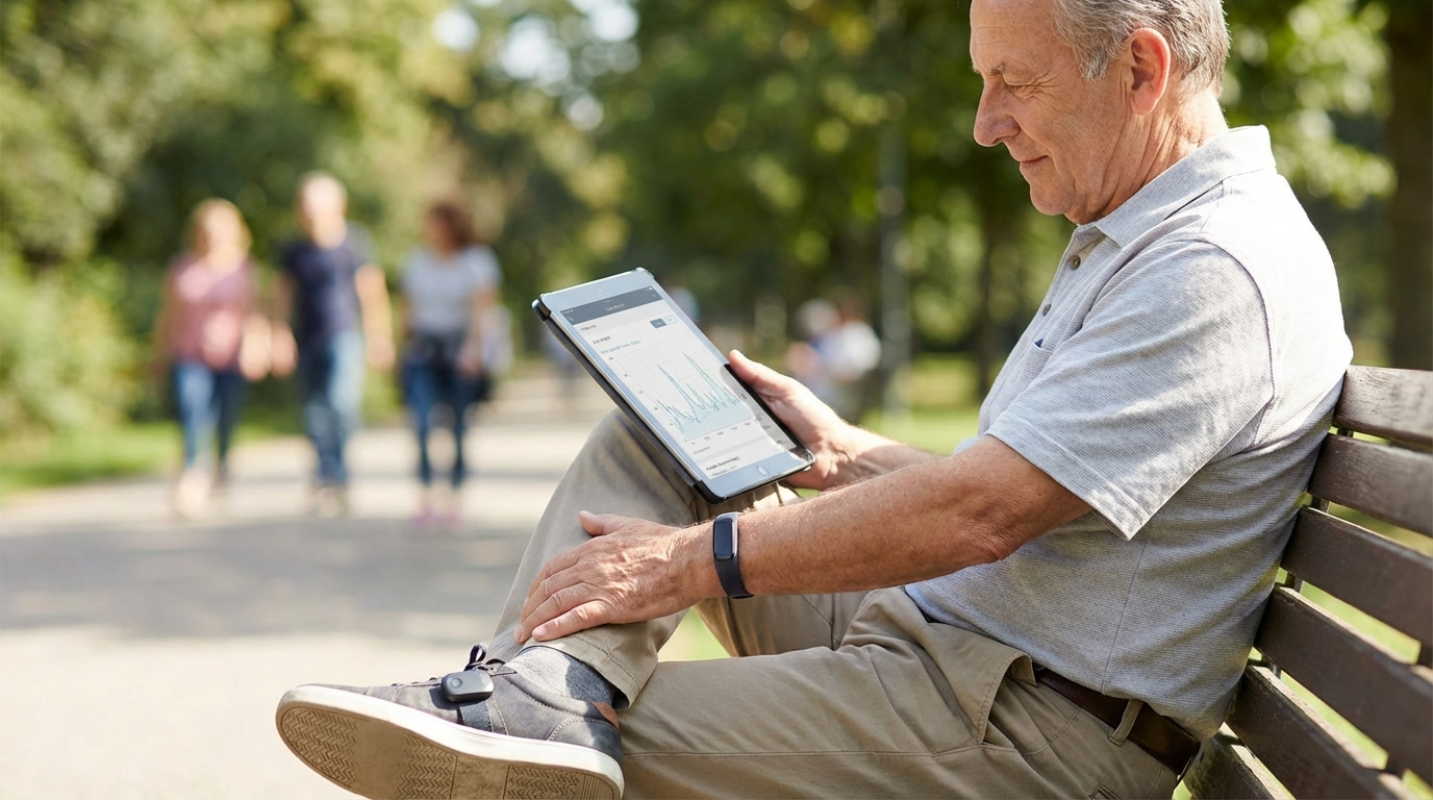
 (Image source: Gemini / Landon Phillips)
 If you or a loved one manages Parkinson’s disease (PD), you know the routine: a brief, high-stakes clinic visit every few months. In those 15 minutes, the neurologist asks, "How have your tremors been?" and "Are you having more 'off' periods?" You try to recall the last three months of fluctuations, relying on subjective memory or perhaps a hastily scribbled diary entry. Sound familiar?
This episodic, subjective reporting is the single greatest challenge in optimizing PD treatment. How can a clinician adjust medication—often measured in tiny, important increments—based on anecdotal evidence from a single snapshot in time?
The answer lies in continuous, objective data. Wearable motion sensors are fundamentally changing this dynamic. These small, unobtrusive devices are the game-changer, moving us beyond guesswork and into the era of precision neurology. They offer unprecedented insight into how Parkinson’s actually behaves in the real world, leading to more personalized and proactive care than ever before.
The Science of Sensing: How Wearables Capture Parkinsonian Signatures
Parkinson’s disease is defined by motor symptoms, and these symptoms are movement problems. The core trio are tremor (involuntary shaking), bradykinesia (slowness of movement), and rigidity (stiffness). Because these are physical manifestations, they are perfectly measurable by technology designed to track physical movement.
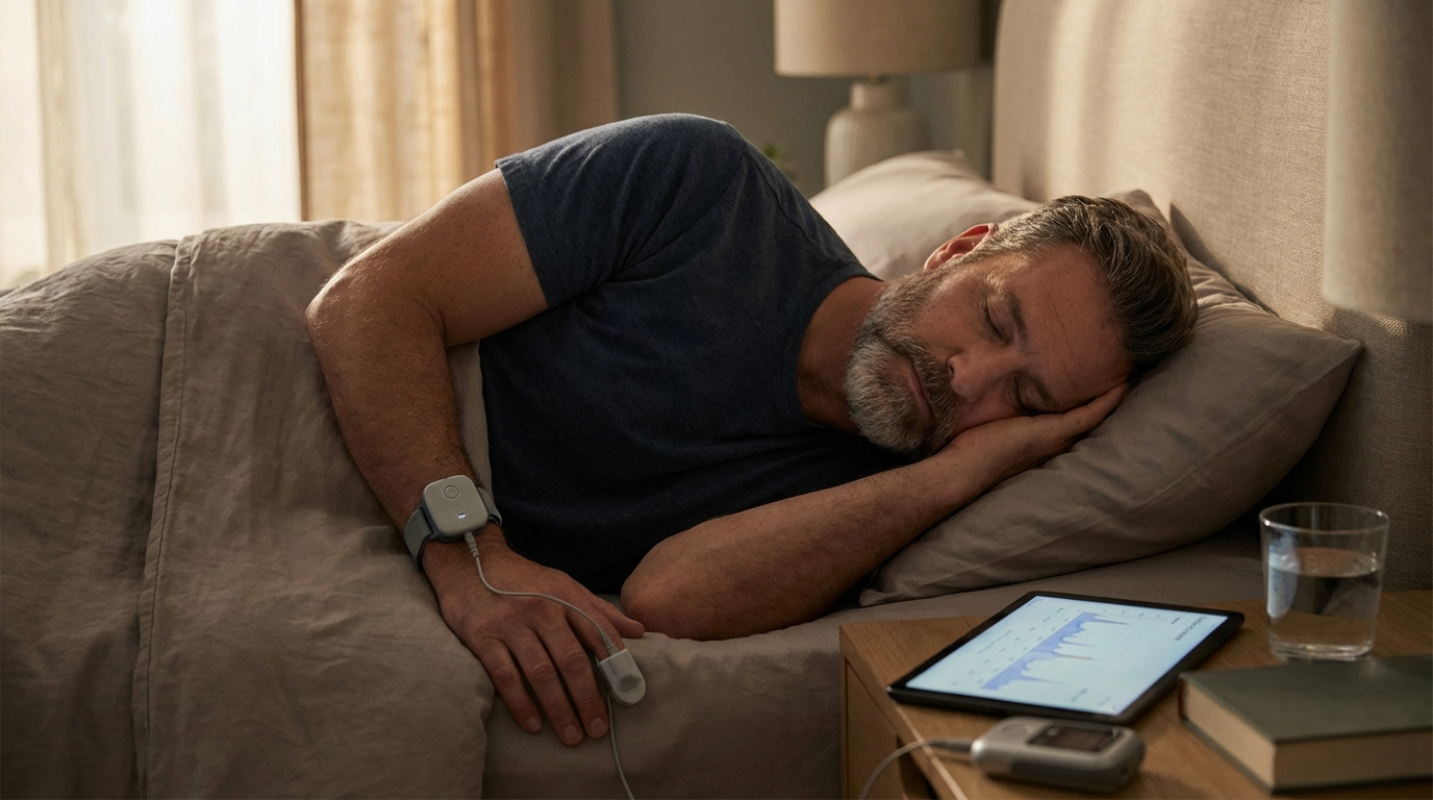
Wearables typically use combinations of accelerometers (measuring linear motion) and gyroscopes (measuring rotational motion). When worn on the wrist, ankle, or waist, these sensors capture millions of data points every day.
Think of it like this: A neurologist assessing you in the clinic uses the Movement Disorder Society-Unified Parkinson's Disease Rating Scale (MDS-UPDRS), which is the gold standard, but it’s a qualitative score taken while you are nervous and focused. Wearables, but capture the truth of your morning akinesia, your afternoon tremors, and your gait variability while walking the dog. It’s the shift from a single, low-resolution photo to a continuous 4K video stream.
Data Power: Transforming Raw Motion into Actionable Clinical Insights
Capturing the raw data is only the first step; the real magic happens in the analysis. Specialized algorithms, often powered by machine learning, sift through the acceleration patterns to distinguish a healthy movement from a pathological one.
These algorithms can accurately detect the frequency and amplitude of a tremor, calculate the speed and range of movement to score bradykinesia, and identify subtle changes in stride length and variability that signal an increased risk of falling or Freezing of Gait (FoG).
So what does this actually mean for your treatment? It means objective data validates whether a medication adjustment worked. Like, clinical trials comparing devices like the STAT-ON™ waist sensor against patient diaries found a correlation of r=0.63 with the UPDRS gold standard—significantly higher than the r=0.24 correlation achieved by subjective diaries.¹ This high correlation gives clinicians confidence in the data.
When analyzing bradykinesia—that frustrating slowness—the PKG™ wrist sensor’s Bradykinesia Score (BKS) showed a significant correlation of r=0.64 with the UPDRS, providing a reliable, automated measurement of movement speed and dexterity.³ For gait analysis, studies show that a sensor located at the waist had the best classification performance for walking, achieving an accuracy of $98.01\%⁴. This level of precision is transforming what used to be a clinical guess into a data-driven decision.
Wearables in Practice: Current Adoption and Future Potential
The technology is undeniably ready. As of 2026, several devices have received regulatory clearance and conditional recommendations from major health bodies. Platforms like Kinesia U™ (often wrist-worn) and STAT-ON™ (waist-worn) are leading the charge, providing objective measures for tremor, dyskinesia, and bradykinesia. The Kinesia U wrist sensor, like, has demonstrated an Area Under the Curve (AUC) of 0.89 for tremor detection, making it highly reliable.
This capability is a boon for telemedicine and remote patient monitoring (RPM). Instead of requiring a patient to travel hours for a check-up, a neurologist can review a week’s worth of objective data from their home. This saves time and money, but more importantly, it allows for proactive intervention before a symptom spirals out of control.
Despite the clear technological readiness, clinical adoption still faces hurdles. A recent survey highlighted that while patient interest is high—with 76\% of PD patients reporting a positive impact on personal management—57\%$ felt the impact on their medical team’s management was "not particularly impactful."² Why the disconnect? Clinicians often cite low confidence in interpreting the massive datasets and concerns about data integration into existing hospital IT systems.
To bridge this gap, we need simplified reporting and better education. The device shouldn't just collect data; it needs to distill it into clear, actionable summaries that fit seamlessly into a clinician’s busy workflow.
Top Recommendations for Monitoring
- STAT-ON™ (Sense4Care): A single waist-worn sensor highly validated for monitoring ON/OFF periods, Freezing of Gait (FoG), and bradykinesia.
- PKG™ (Global Kinetics): A popular wrist-worn device that provides a Bradykinesia Score (BKS) and tracks dyskinesia and tremor fluctuations.
- NeuroRPM (via Apple Watch): A software solution using consumer hardware, offering accessible tracking of tremor and bradykinesia, with FDA clearance.
Stepping Confidently into Personalized Parkinson’s Care
Wearable motion sensors aren't just novel gadgets; they are needed diagnostic and monitoring tools that fundamentally rewire the relationship between the Parkinson’s patient and the care team. They move the locus of control from the clinic to the patient’s daily life.
The future of this technology looks even more exciting. We’re already seeing research focused on integrating non-motor symptom tracking—like sleep quality and heart rate variability—alongside motor data. The ultimate goal is a closed-loop treatment system, where sensor data automatically informs an implanted device or a smart pump, adjusting medication delivery in real time to prevent an 'off' period before it even begins.
This is the promise of personalized medicine. By helping both patients and clinicians with objective, continuous data, we are stepping confidently into an era where managing Parkinson’s is less about reacting to crises and more about maintaining consistent, high-quality life. The days of relying on memory in the clinic are numbered, and that’s a victory for everyone involved.
Sources:
1. Frontiers in Neurology - The Role of Wearable Sensors in Parkinson's Disease Management
2. Frontiers in Digital Health - Wearable Technology Adoption in Parkinson's Disease
4. MDPI - A Systematic Review of Wearable Sensors for Gait Assessment in Parkinson’s Disease
5. NIH - Kinesia U Clinical Validation
This article is for informational and educational purposes only. Readers are encouraged to consult qualified professionals and verify details with official sources before making decisions. This content does not constitute professional advice.